
Smart Lock Brands in Dubai: Which One Is Right for Your Door?
Choosing a smart lock in Dubai can be surprisingly confusing. Yale, Philips, Samsung, Aqara, Kaadas, Häfele, EZVIZ and several other brands offer locks with different combinations of fingerprint access, PIN codes, cards, mobile apps and physical-key backup. The challenge isn't simply finding smart lock brands in Dubai; it's finding a model that works with your door and offers the access features you actually need.
Before buying a lock, start with the door. Door thickness, the existing mortise or locking mechanism, backset, handle position, and available installation space can all affect compatibility. If you're considering professional smart lock installation in Dubai, having the existing door and hardware checked before purchasing a lock can help you avoid choosing a model that isn't suitable for the installation.
A well-known brand is useful, but the brand name alone doesn't tell you whether a lock will fit your door. Different models from the same manufacturer can have completely different dimensions, access methods, connectivity, and installation requirements.
This guide looks at some of the smart lock brands you'll encounter in Dubai and, more importantly, what you should check before deciding which one belongs on your door.
Start With Your Door, Not the Smart Lock Brand
It's easy to choose a smart lock based on appearance.
You see a fingerprint reader, large digital keypad, or push-pull handle and think it would look perfect on your apartment or villa door.
But smart-lock compatibility is more technical than that.
Before selecting a model, check factors such as:
- Door material
- Door thickness
- Existing mortise or locking mechanism
- Backset
- Handle and lock position
- Available space on both sides of the door
- Door and frame alignment
- Existing holes and cut-outs
- The manufacturer's installation requirements
This is particularly important when replacing an existing mechanical lock with a larger smart-lock body.
A lock can have all the features you want and still be the wrong choice if it doesn't suit the existing door.
Brand Matters, but the Smart Lock Model Matters More
One of the biggest mistakes when comparing smart locks is assuming that every product from the same manufacturer has similar specifications.
They don't.
For example, one model from a manufacturer might support fingerprint, PIN, and card access, while another may use a completely different combination of entry methods. Connectivity can also vary between models, as can the mortise, dimensions, emergency access options, and installation requirements.
So instead of asking:
“Is Yale good?”
or:
“Should I buy Philips or Aqara?”
a more useful question is:
“Which specific model from this brand suits my door and the way I want to manage access?”
With that distinction in mind, let's look at some of the smart lock brands worth considering.
1. Yale Smart Locks
Yale is an established lock and security brand with a range of smart-lock products. Depending on the specific product and market, Yale smart locks can offer different combinations of digital access and connectivity features.
Rather than choosing Yale purely because of the brand name, compare the specifications of the individual model you're considering.
Check:
- Supported access methods
- Door compatibility
- Lock dimensions
- Connectivity requirements
- Compatible apps or accessories
- Emergency-access method
- Battery requirements
Yale is worth considering if you want a smart lock from a long-established manufacturer, but the specific model still needs to match your door.
2. Philips Smart Locks
Philips-branded smart door locks are another option you'll encounter when comparing digital locks in Dubai.
Different models can offer different access methods and lock configurations, so avoid assuming that every Philips smart lock provides the same features.
When comparing Philips models, look at the exact product specification and consider which access methods your household actually needs.
For example, if fingerprint entry is your main reason for buying a smart lock, there is little value in paying for additional connected features that you won't use.
Compatibility should come first.
3. Samsung Digital Door Locks
Samsung digital door locks are well known for their distinctive digital-lock designs, including keypad and push-pull configurations across various product ranges.
If you're considering a Samsung lock, check the exact model carefully rather than selecting it on appearance alone.
The existing door configuration matters because switching from a conventional lever lock to a different smart lock format may require more than just removing one lock and attaching another.
Check the manufacturer's specifications for the specific product and ensure its dimensions and installation requirements suit your door.
4. Aqara Smart Locks
Aqara is particularly interesting for people who already use-or plan to use-a connected smart-home ecosystem.
However, smart-home integration should not be confused with basic door compatibility.
A lock may work perfectly with the smart-home platform you prefer but still not be appropriate for your particular door.
When considering an Aqara model, check both sides of the equation:
Physical compatibility: Will the lock fit and operate correctly on the door?
Digital compatibility: Does the specific model support the ecosystem, hub, or connectivity features you intend to use?
Both matter.
5. Kaadas Smart Locks
Kaadas offers a range of digital and smart-lock products with different designs and access configurations.
As with the other brands in this guide, features vary by model.
If you're comparing a Kaadas lock with Philips, Yale, or another manufacturer, don't compare brands solely by the number of advertised features.
Instead, compare the actual models based on:
- Door compatibility
- Access methods
- Locking mechanism
- Backup access
- Battery management
- Connectivity, where applicable
- Installation requirements
A long feature list doesn't necessarily make one lock a better choice for your particular door.
6. Hafele Digital Locks
Häfele is widely associated with architectural and furniture hardware and also offers electronic locking products.
For someone already using compatible Häfele hardware, a Häfele digital lock may be worth considering, but again, the decision should be based on the particular product rather than the brand name alone.
Check the intended application, door specifications, and manufacturer's installation requirements before purchasing.
7. EZVIZ Smart Locks
EZVIZ is known for connected security and smart-home products and also offers smart-lock products in selected markets.
For customers already using other connected devices, ecosystem compatibility may be one reason to consider the brand.
However, check what the specific lock actually supports. App functionality, access methods, and connectivity can vary by product and region.
More importantly, confirm that the lock itself is suitable for the door before making ecosystem integration the deciding factor.
8. Eufy Smart Locks
Eufy also offers smart locks as part of its broader connected-home product range.
Depending on the model, different access and connectivity options may be available.
If you're considering Eufy because you already use other products within its ecosystem, check whether the specific lock and its supported functionality are available and appropriate for your intended installation.
Don't assume that integration alone makes a particular model the right physical lock for your door.
9. Ultraloq
Ultraloq offers keyless and smart-lock products with different combinations of access methods depending on the model.
When considering one for a Dubai property, check the manufacturer's specifications for the particular product, especially its intended door configuration and installation requirements.
This is particularly important with retrofit-style products because compatibility depends heavily on the existing lock-and-door arrangement.
10. ZKTeco
ZKTeco is associated with biometric and access-control products and also offers electronic locking solutions.
Its product range makes it relevant to research for both residential and commercial access applications, but not every product is intended for every type of door.
For a home or apartment, focus on the specifications of the individual lock rather than the manufacturer's wider access-control portfolio.
What About Tuya and Smart Life Locks?
This needs clarification because you'll often see locks advertised as:
“Tuya Smart Lock”
or:
“Smart Life Door Lock.”
Tuya and Smart Life are commonly associated with the technology/platform ecosystem used by connected devices from different manufacturers. Therefore, a lock using the Tuya or Smart Life ecosystem shouldn't be treated exactly the same as a conventional lock from a manufacturer.
If you're considering one of these products, find out who actually manufactures the lock, what specifications apply to that exact model, and what support is available.
The app or platform is only one part of the product.
Which Smart Lock Features Do You Actually Need?
A long feature list can make a smart lock look impressive, but more features don't automatically make it a better lock.
Start with the people who need to use the door.
Fingerprint Access
Fingerprint entry can be convenient for household members who regularly use the door and don't want to carry a key or remember a PIN.
Check how fingerprint enrollment and user management work on the particular model.
PIN Code
PIN access removes the need to carry a physical credential.
Some models may also support different types of temporary or managed codes. If that's important to you, confirm exactly what the particular product supports.
Card or RFID Access
Some smart locks provide card-based access.
This may suit households or applications where users prefer to carry a card rather than use a PIN, fingerprint, or phone.
Mobile App
App connectivity can provide additional access management features, depending on the product.
Don't assume that every “smart” lock provides remote unlocking from anywhere. Some features may depend on Wi-Fi, Bluetooth, a compatible hub, or another gateway.
Check the connectivity architecture of the specific model.
Physical Key Backup
Some smart locks retain a mechanical-key option for backup access.
If this matters to you, check whether the model includes it and understand how to access the backup cylinder.
Emergency Power
Battery-powered locks eventually need fresh batteries.
Some models provide an external emergency power source when the internal batteries are depleted. Others may use different backup arrangements.
Check the manufacturer's instructions so you know what happens before the batteries run out.
Does a Smart Lock Need Wi-Fi?
Not necessarily.
Many smart locks can perform basic local functions without a continuous internet connection. Depending on the model, this might include fingerprint, PIN, card or other local access methods.
Connected functions are different.
Remote access, notifications, user management, or integration with other smart-home devices may require Wi-Fi, a compatible hub, gateway, or another internet-connected device.
This is why you should check the connectivity requirements of the specific model rather than assuming that every smart lock works the same way.
Is a Smart Lock More Secure Than a Normal Lock?
Not automatically.
A smart lock can provide access-management features that a conventional mechanical lock may not offer, but the word “smart” by itself doesn't establish how secure a lock is.
Consider the complete installation:
- Locking mechanism
- Door construction
- Door alignment
- Installation quality
- Credential management
- Backup-access method
- Manufacturer specifications
- Software and account configuration where applicable
A high-quality mechanical lock, installed correctly, may be more appropriate for one door, while a compatible smart lock may offer useful access-management advantages for another.
Choose based on the actual requirement rather than assuming digital always means better.
Apartment, Villa or Office: Does Property Type Matter?
Yes, but the door itself matters more than the property label.
Two apartments in Dubai can have completely different entrance doors and locking systems. The same applies to villas and offices.
Instead of choosing a lock simply because a product is advertised for an “apartment” or “villa,” inspect the existing door and hardware.
For an apartment, building or landlord requirements may also need to be considered before changing existing door hardware.
For an office, access requirements can differ again, particularly where multiple staff members require controlled entry.
Why Professional Smart Lock Installation Matters
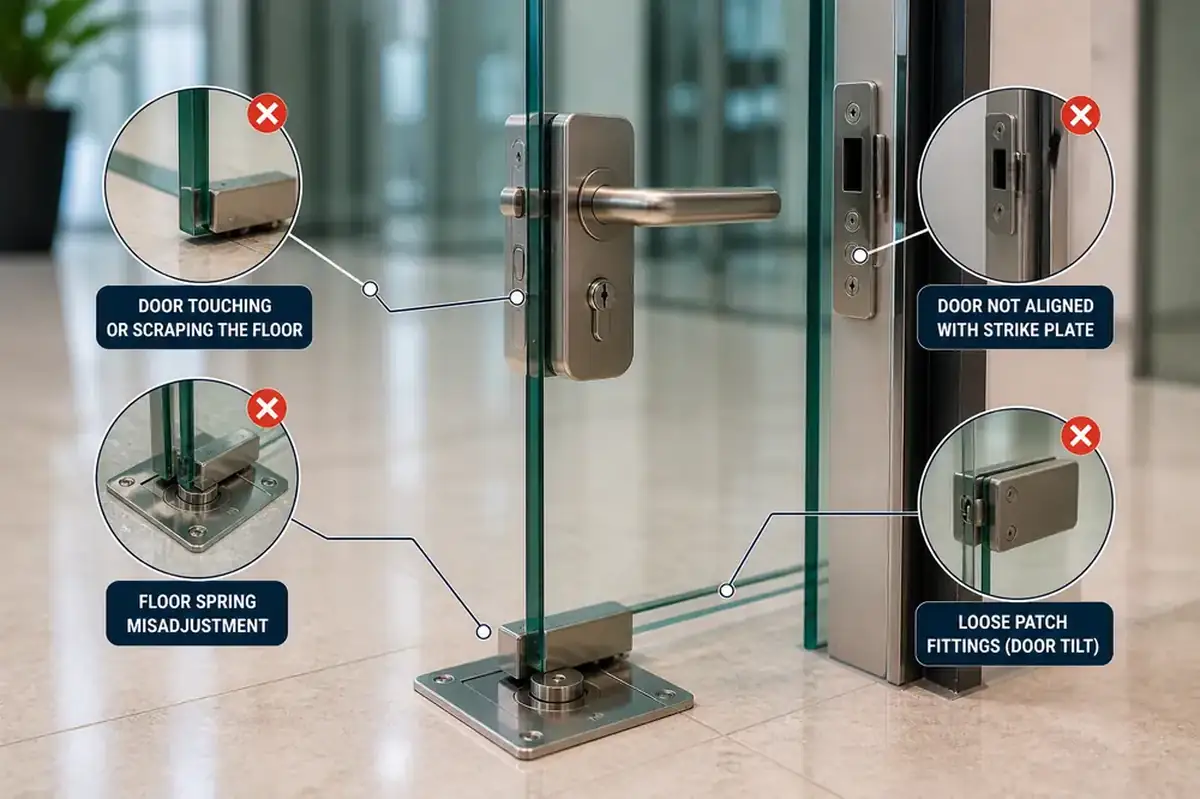
Even a suitable smart lock can perform poorly if the door isn't prepared correctly or the lock is fitted out of alignment.
Installation may involve more than attaching the front and rear units. Depending on the door and model, the installer may need to consider the mortise, spindle, lock body, strike position, wiring or cable routing, handle operation, and final door alignment.
After installation, the lock should operate smoothly before configuring digital features.
The exact process varies considerably between products, which is another reason to select the lock based on the actual door rather than appearance alone.
Questions to Ask Before Buying a Smart Lock
Before paying for a smart lock, answer these questions:
- What type of door do I have?
- What lock or mortise is currently installed?
- Is the new model compatible with the door thickness?
- Will the existing door need modification?
- Which access methods do I genuinely need?
- What happens if the batteries are depleted?
- Does the lock have the backup-access method I want?
- Does it require Wi-Fi, Bluetooth, a hub or gateway for the features I need?
- How are users added and removed?
- What manufacturer support and warranty apply to the exact model being purchased?
If you can't answer the first four questions, check the door before ordering the lock.
Frequently Asked Questions
What Are the Best Smart Lock Brands in Dubai?
There isn't one brand that is automatically best for every door.
Yale, Philips, Samsung, Aqara, Kaadas, Häfele, EZVIZ, Eufy, and other manufacturers offer a range of products. The better choice depends on the specific model, door compatibility, required access methods, and features you intend to use.
Which Smart Lock Is Best for an Apartment in Dubai?
Start by checking the apartment door and existing lock.
Once you know which models are physically compatible, compare their access methods, backup options and connectivity features. If you're renting, also check whether permission is required before changing landlord-owned door hardware.
Can Any Smart Lock Be Installed on Any Door?
No.
Door thickness, material, existing lock configuration, mortise dimensions, backset, handle position, and available fitting space can all affect compatibility.
Can I Install a Smart Lock Without Changing the Door?
Sometimes.
Certain models may work with an existing door configuration, while others can require modification or replacement of existing locking components.
It depends on the door and the specific smart lock model.
What Happens When a Smart Lock Battery Dies?
It depends on the product.
Many models provide low-battery warnings, while some offer an external emergency-power connection, physical key or another backup method. Check the manufacturer's instructions for the specific model you're considering.
Do Smart Locks Work Without the Internet?
Many models can perform basic local access functions without continuous internet connectivity.
Remote or connected features may require Wi-Fi, a hub, gateway, or another connection depending on the product.
Should I Buy the Smart Lock Before Calling an Installer?
If you already know that the exact model is compatible with your door, you can.
If you're unsure about the mortise, door thickness, backset, or installation space, it makes more sense to check compatibility before purchasing.
Which Smart Lock Brand Should You Choose?
There is no single answer.
A Yale lock may suit one door while a Philips, Aqara, Samsung, Kaadas or another model may be a better match for another. What matters is the specific lock, the specific door, and the way you intend to use it.
Start with compatibility. Then compare access methods, backup options, connectivity and user management. Finally, consider appearance and additional features.
The smartest purchase isn't necessarily the lock with the most technology. It's the one that fits the door properly and gives you the access options you actually need.


.png)