
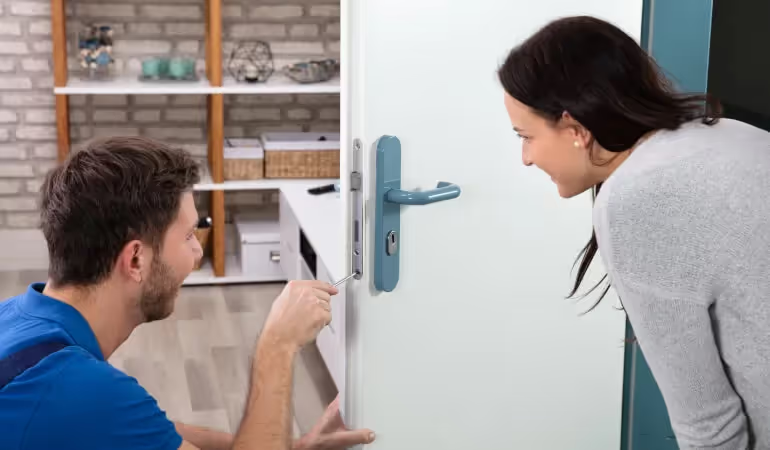
Top 5 Situations You’ll Need Dubai Locksmiths Right Away
Most people don’t think about calling a locksmith until they’re standing outside a locked door or searching everywhere for a key they can’t find. This is often when a reliable Dubai locksmith becomes the first person you think of calling. From home and office lockouts to lost keys, faulty locks and vehicle key problems, there are plenty of situations where professional help makes sense. Knowing when to call-and when to leave the lock alone-can also prevent a simple problem from turning into an unnecessary repair.
Here are five common situations where you may need professional locksmith assistance.
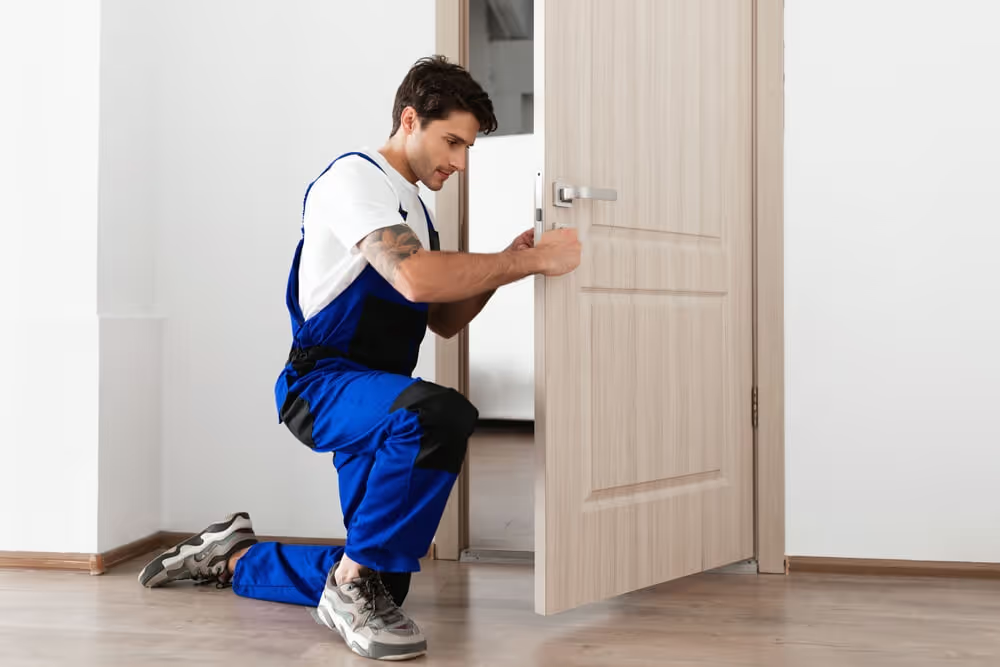
1. You’re Locked Out of Your Home or Office
Getting locked out is one of the most common reasons to call a locksmith. You may have left the key inside, closed a self-locking door behind you, or discovered that your key suddenly won’t operate the lock.
Before calling anyone, check whether you have another authorized entry point to the property or whether a family member, colleague, or someone you trust has a spare key.
If there is no practical way in, avoid trying to force the door yourself. Using unsuitable tools or excessive force can damage the lock, door or frame and turn a straightforward lockout into a repair job.
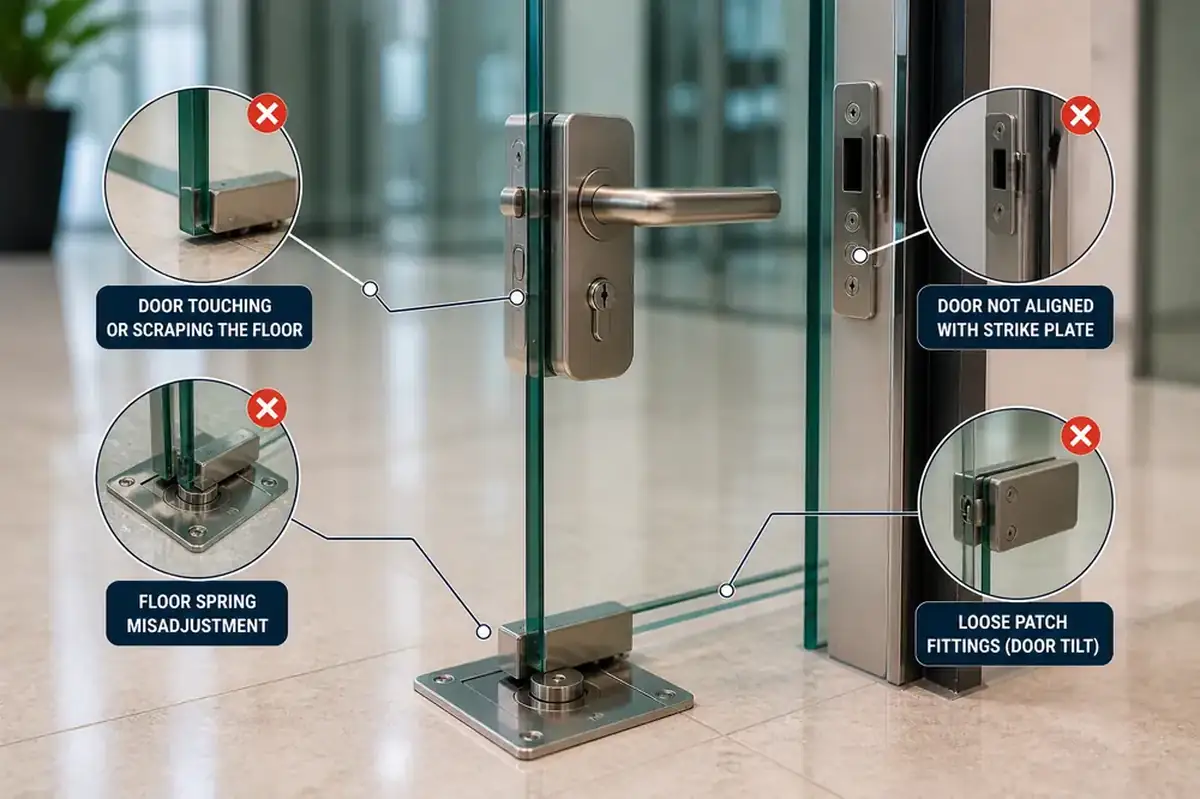
A locksmith can inspect the lock first and determine the appropriate way to deal with it. The problem isn’t always the key. Sometimes the cylinder, locking mechanism, or door alignment may be preventing the lock from operating normally.
If your lock has already become difficult to turn or needs to be moved into a particular position before it opens, don’t ignore it. Getting it checked before it stops working completely can save you from a future lockout.
2. You’ve Lost Your Keys
There is an important difference between leaving your keys somewhere you know is secure and losing them without knowing where they ended up.
If you left your keys at a family member’s house, getting your spare key may solve the problem. If you genuinely don’t know where they were lost, however, you should also think about the security of the property.
That doesn’t necessarily mean every lost key requires an entirely new lock.
Depending on the type of lock, its condition, and the circumstances, different options may be available. A locksmith can inspect the existing lock and explain whether rekeying, replacing the cylinder, or replacing the lock is appropriate.
Most people call a locksmith having already decided what they need. "I lost my key, so change the lock." Understandable — but it skips the part where you find out whether that's true.
Say the key vanished somewhere between the office car park and your front door. Nobody has it, nobody knows where it went, and there's nothing on it pointing to your address. A rekey handles that in twenty minutes, and the old key stops working the moment we're done. Now say it went missing along with your wallet, ID inside. Different problem entirely. That one deserves a proper look at the door.
So tell your technician what actually happened. The story shapes the solution, and a good locksmith would rather hear it than start pricing hardware.
The same logic follows you into a new place. You have keys — the ones the agent handed over. What you don't have is a list of everyone else holding a copy. Previous tenant. Their cleaner. The friend who watered the plants. A contractor from two handovers ago. None of them are up to anything, most likely, and none of them are on any list you'll ever see.
That's worth ten minutes of thought, ideally before the boxes are unpacked rather than on the first night when something feels off.
3. Your Key Breaks or the Lock Stops Working Properly
Locks don’t always fail without warning.
You might notice that the key has become harder to turn, the cylinder feels stiff, or the door needs to be pushed or pulled before the lock works. A key may also become bent, damaged, or eventually break inside the cylinder.
If a lock suddenly feels different, repeatedly forcing the key isn’t a good solution. It can make an existing problem worse and may leave part of the key stuck inside the lock.
A locksmith can check the key, cylinder, locking mechanism and door to identify what is actually causing the problem.
Depending on the fault, the solution might be an adjustment, repair, broken-key extraction or replacement of the affected component. There is no reason to assume that every faulty lock needs to be completely replaced.
This is also why it makes sense to deal with a troublesome lock early. Calling a locksmith while the door can still be opened normally is usually much more convenient than waiting until you are locked outside.
4. You’re Having Trouble With Your Car Key or Lock
Automotive locksmithing is different from general home or office locksmith work.
You might need assistance because your key is locked inside the vehicle, has been lost or damaged, or is no longer working as expected.
Car keys also vary considerably between vehicles. Depending on the make, model and year, a vehicle may use a mechanical key, remote key, transponder key or smart key. The equipment and procedure required will therefore depend on the particular vehicle.
If you are locked out of your car, avoid experimenting with makeshift tools around the door or window. Modern vehicle doors can contain wiring, seals, trim and other components that you don’t want to damage while trying to gain access.
The first question a car locksmith asks isn't "where are you?" It's "what are you driving?"
Sounds like small talk when you're standing in a car park in August. It isn't. A 2012 Corolla and a 2021 Corolla require different equipment in the van, and the technician who shows up without it has to drive back to get it. The year matters as much as the badge.
Then tell them what actually went wrong, in plain words. Locked out with the key visible on the seat is one job. Key snapped in the ignition is another. Turns in the door but the engine won't catch — that's a third, and it isn't really a key problem at all. Each of those sends a different technician with a different case of tools.
Thirty seconds on the phone. It's the difference between one visit and two.
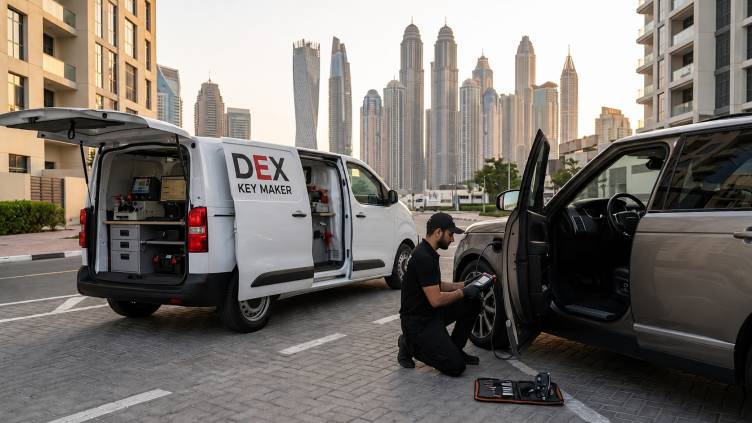
For vehicle unlocking services, DEX Key Maker requires identification and vehicle registration to verify the requester's authorization.
If a child or another person is locked inside a vehicle and there is an immediate safety risk, contact the appropriate emergency services rather than waiting for a locksmith.
5. A Safe, Cabinet or Other Lock Won’t Open
Front doors and vehicles aren’t the only things that can leave you locked out.
Safes, filing cabinets, drawers, padlocks and other secured storage can also become inaccessible. You might have lost the key, damaged the lock, or discovered that the mechanism simply isn’t operating as it normally does.
Electronic locks can present their own problems as well. If you are dealing with an electronic or smart lock, check the manufacturer’s instructions first. The recommended troubleshooting procedure will depend on the particular product.
If the basic checks don’t solve the problem, professional assistance may be necessary.
Avoid forcing a safe, cabinet, or lock open without understanding how the mechanism works. You could damage the lock, the surrounding material, or the item you are trying to access.
A locksmith can first identify the type of lock and assess the problem before deciding what to do.
Should You Repair or Replace the Lock?
One of the first questions customers often have is whether a faulty lock needs to be replaced.
There isn’t one answer that applies to every lock.
A relatively minor fault may be repairable, while a badly worn or damaged lock may be better replaced—the condition and type of lock, availability of suitable parts and nature of the problem all matter.
Security is another consideration. If keys have been lost and you are concerned about who may have them, the decision isn’t only about whether the existing lock still works.
The sensible approach is to have the problem assessed first, rather than assuming replacement is always necessary.
What Should You Tell the Locksmith Before They Arrive?
Giving the locksmith the right information can make the process easier.
Start by explaining exactly what happened. Did you leave the key inside? Has the key broken? Is the lock turning without opening? Have you lost every copy of the key?
For a property, tell the locksmith whether it is a home, office or another type of premises and describe the door and lock if you can.
For a vehicle, provide the make, model and year.
If you’re unsure what type of lock you have, don’t guess. A clear photograph may help the locksmith identify it if they ask you to send one.
The more accurately you describe the problem, the easier it is for the technician to understand what may be required.
Choosing a Locksmith in Dubai
When you’re locked out, speed matters, but it shouldn’t be the only consideration.
Explain your problem clearly before requesting a technician and ask about the expected charges where possible. Some jobs can’t be accurately priced until the lock has been inspected, but you should still understand how the company charges for its services.
You should also expect a professional locksmith to take security seriously. For certain jobs, you may be asked to provide identification or evidence that you are authorized to access the property or vehicle.
Professional locksmithing isn’t simply about opening a door as quickly as possible. The technician should understand the problem, choose an appropriate solution, and avoid unnecessary work or damage.
Don’t Wait Until the Lock Completely Fails
Not every locksmith call has to begin with an emergency.
If your key regularly gets stuck, the lock is difficult to turn, or the door needs to be pushed into a certain position before it locks, have the problem checked.
Locks and door hardware can develop problems for various reasons, and forcing something that isn’t working properly can make matters worse.
Getting the issue looked at while the lock is still functioning gives you more time to understand the problem and decide what to do about it.
Conclusion
Lock problems tend to happen at inconvenient times. You may leave your keys inside your home, lose a car key, break a key in a lock, or suddenly find that a door you use every day will no longer open properly.
If a lock isn't working, don't rush to force it open or try different tools yourself. You could easily turn a small problem into a damaged lock or door. Check if there's another safe way in, and if not, call a locksmith to take a proper look at the problem.
At DEX Key Maker, we work with residential, commercial, and automotive lock-and-key problems across Dubai. Our approach is to understand what has gone wrong first and then determine what needs to be done.
And if your lock has already started becoming difficult to use, don’t necessarily wait until you’re standing on the wrong side of a locked door. Sometimes the best time to call a locksmith is before the situation becomes an emergency.


.png)