
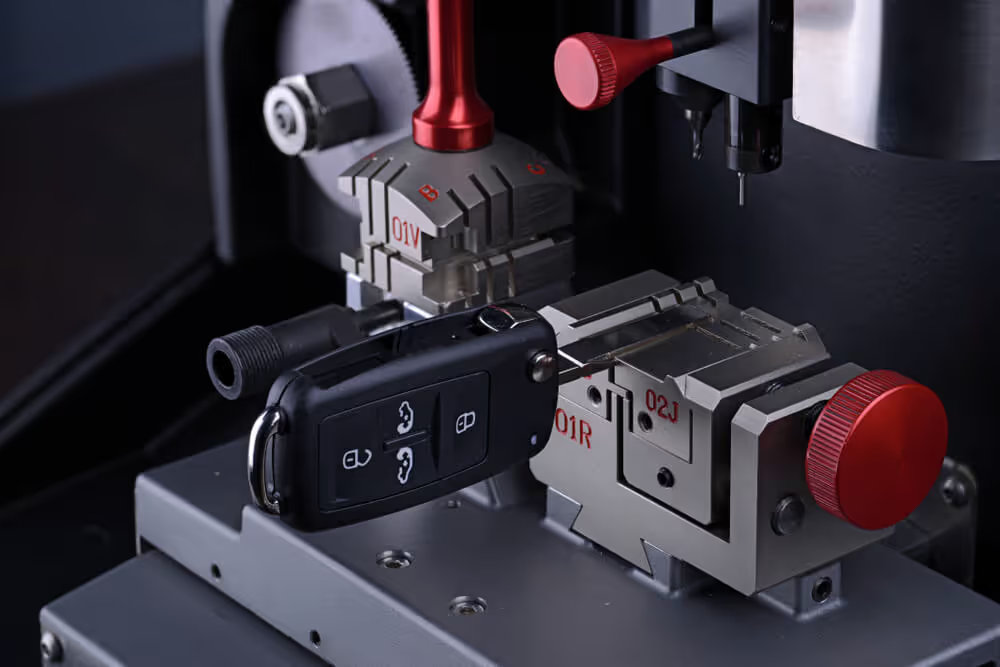
Will A Key Duplication Service Copy A “Do Not Duplicate” Key In Dubai?
Can You Copy a “Do Not Duplicate” Key in Dubai?
You may have seen keys stamped with words such as “Do Not Duplicate,” “Do Not Copy,” or similar instructions. If you need another copy, the obvious question is: can a key duplication service make one?
The answer depends on more than the words stamped on the key. A “Do Not Duplicate” marking and a genuinely restricted key system are not necessarily the same thing. The key profile, manufacturer, availability of compatible blanks, authorization requirements, and the type of locking system can all affect whether another key can be made.
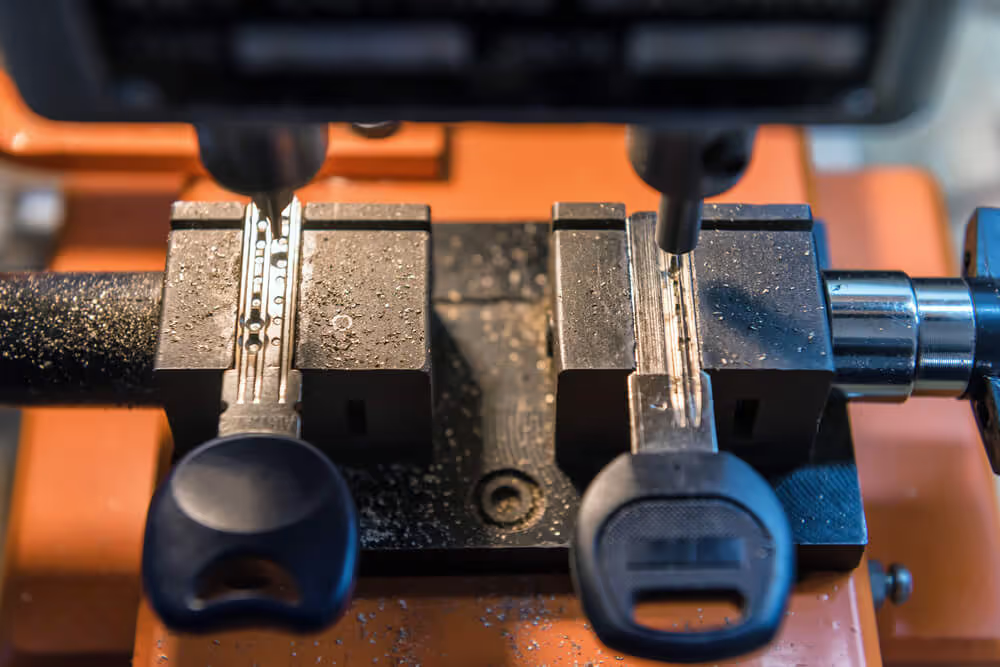
If you need key duplication in Dubai, the best approach is to identify the original key first, rather than assuming it can or cannot be copied based on an engraving.
This guide explains the difference between ordinary “Do Not Duplicate” keys and restricted key systems, why authorization may sometimes be required, and what alternatives are available when stronger control over key copies is important.
What Does the Marking Actually Mean?
“Do Not Duplicate” is usually an instruction indicating that additional copies of the key should not be made without appropriate authorization.
However, the words printed or engraved on a key don't by themselves explain what type of key system you're dealing with.
Two keys could both carry a similar marking while belonging to very different locking systems.
One might use a relatively conventional key profile, while another could be part of a restricted system with controlled blanks or specific duplication procedures.
For this reason, the key itself must be identified before determining whether duplication is possible and which requirements apply.
Can the Key Still Be Copied?
It depends on the key.
The presence of a “Do Not Duplicate” marking doesn't tell you everything about whether the key can technically be copied or whether a locksmith will agree to duplicate it.
A key duplication provider may need to consider:
- The key profile
- Manufacturer and key system
- Availability of a compatible blank
- Whether specialized equipment is required
- Whether the key belongs to a restricted system
- Whether authorization is required
- The provider's own key-control procedures
Therefore, rather than asking only, “Does my key say Do Not Duplicate?”, a better question is:
“What type of key is this, and what is required to obtain an authorized copy?”
Does the Engraving Provide Additional Security?
The engraving itself isn't a physical security mechanism.
Writing “Do Not Duplicate” on a conventional key doesn't physically change the cylinder or prevent a compatible key-cutting machine from reproducing the key profile where the necessary blank and equipment are available.
However, the marking can communicate an important instruction: additional copies shouldn't be made without authorization.
This differs from a restricted key system, where key control can be built into the system's design and distribution.
That distinction is important for property owners and businesses that want greater control over who can obtain additional keys.
Standard Keys vs Restricted Key Systems
These terms shouldn't automatically be treated as interchangeable.
Do Not Duplicate Key
A “Do Not Duplicate” key carries an instruction or marking requesting that unauthorized copies not be made.
The marking itself doesn't necessarily indicate whether the key uses a restricted profile or a controlled blank.
Restricted Key System
A restricted key system is designed to provide greater control over additional keys.
Depending on the manufacturer and system, obtaining another key may involve controlled blanks, specific equipment, an authorized supplier, or proof that the person requesting the key has permission to obtain it.
Why Might a Locksmith Ask for Authorization?
Keys provide physical access to homes, offices, shops, storage areas, and other private spaces.
For certain duplication requests, particularly for controlled or restricted systems, a locksmith or key supplier may request evidence that the person requesting the additional key is authorized to obtain it.
Depending on the situation and key system, this could involve identification or authorization associated with the property or organization.
This shouldn't automatically be viewed as an inconvenience.
Key control becomes much less useful if anyone who obtains a key can request additional authorized copies without appropriate checks.
If you're requesting a copy on behalf of a company, landlord, property manager, or another organization, it can be helpful to confirm the required authorization before visiting.
Why Businesses Should Think About Key Control
For a home with only a few authorized keyholders, managing physical keys can be relatively straightforward.
For a business, the situation can be very different.
Keys may be issued to:
- Employees
- Managers
- Cleaning staff
- Maintenance personnel
- Contractors
- Temporary staff
- Property management
Over time, it can become difficult to know exactly how many copies exist and who still has them.
Simply stamping “Do Not Duplicate” on a key doesn't necessarily provide the level of key control a business requires.
If controlling additional copies is important, it may be worth considering a more structured solution.
What If Too Many Copies of Your Keys Already Exist?
If you're unsure how many keys have been distributed, making the next key harder to duplicate doesn't address copies that already exist.
There are several options to consider.
Rekey the Existing Lock
Depending on the type of cylinder or locking system, rekeying can change the lock so that previously issued keys no longer operate it.
New keys are then issued for the changed configuration.
This can be useful when the existing lock remains suitable, but control over the old keys has been lost.
Change the Lock
If the existing lock is damaged or unsuitable, or you want to switch to a different locking solution, a lock change may be more appropriate.
Changing the lock also provides an opportunity to reconsider the type of key system being used.
Move to a More Controlled Key System
Businesses that need stronger control over additional keys can consider an appropriate restricted or controlled key system.
The exact options depend on the required application and available systems.
Consider Electronic Access Control
For some businesses, the bigger problem isn't key duplication at all-it's managing access for a changing number of users.
An electronic access-control system can use individual cards, fobs, PINs, biometric credentials, or other supported credentials instead of issuing the same mechanical key to everyone.
Depending on the system, individual credentials can be managed or disabled without affecting access for other authorized users.
Mechanical and electronic access systems serve different requirements, so the appropriate solution depends on the property.
Key Control for Rental Properties
Landlords and property managers may want to control how many keys are in use for a property, but simply engraving “Do Not Duplicate” shouldn't be mistaken for a complete key-control strategy.
The appropriate approach depends on the property, lock system, and access requirements.
For properties where tighter control over additional keys is important, a controlled key system may provide a more structured approach than relying solely on an instruction stamped onto an ordinary key.
Any key policies should also be consistent with the relevant tenancy agreement, property management requirements, and applicable rules.
What Should a Tenant Do If Another Key Is Needed?
This question shouldn't be answered with a universal yes-or-no based solely on the words stamped on the key.
The answer can depend on factors such as:
- Type of key
- Key system
- Authorization requirements
- Tenancy agreement
- Building or property-management requirements
If you're a tenant and need an additional key, check your property's requirements before requesting a duplicate key.
If the key belongs to a controlled or restricted system, additional authorization may also be required by the key provider or system.
What If the Key Cannot Be Duplicated?
If a key cannot be duplicated through a conventional key-copying process, that doesn't necessarily mean there is no way to obtain another authorized key.
Depending on the system, an additional key may need to be:
ordered through an authorized supplier
requested through building or property management
approved by the organization controlling the key system
or
produced according to the manufacturer's key-control procedure
The correct route depends on the particular key.
This is another reason to identify the key first rather than assuming every key can be duplicated using the same process.
Do You Need the Original Key for Duplication?
For conventional key duplication, having a working original generally makes identification and copying much more straightforward.
The locksmith can inspect the key profile and determine whether an appropriate blank and duplication method are available.
A heavily worn, bent, or damaged key may require additional assessment.
If you've completely lost your only key, the situation is no longer simply a standard key-copying request. The lock and circumstances may need to be assessed to determine an appropriate solution.
Can Every Key Maker Duplicate Every Type of Key?
No.
Different keys require different blanks, machines, equipment, and technical capabilities.
A particular locksmith may be able to duplicate one type of key but not another.
Restricted systems may also have their own distribution and authorization requirements.
So claims such as “every type of key can be copied” should be treated cautiously.
The most practical approach is to show the original key to the key duplication provider for identification.
What Should You Bring for Key Duplication?
If you need another authorized copy of a key, bring the original working key whenever possible.
For certain keys or systems, you may also be asked for appropriate authorization.
If you're unsure whether the key can be duplicated, you can first provide clear photos showing:
- Front of the key
- Back of the key
- Key head and any markings
- Brand or manufacturer name
- Any visible numbers or identification
A photo may help identify the general type, though physical inspection may still be required to confirm duplication.
Choosing Between Standard and Controlled Key Duplication
If you simply need an additional household key for an authorized user, a conventional key may be entirely suitable.
If you're managing keys for a business, commercial property, or location with many users, key control deserves more attention.
Consider:
How many people need keys?
Who is allowed to request additional copies?
What happens when an employee leaves?
Do you know how many copies currently exist?
What happens if a key is lost?
Do different people need access to different doors?
These questions can help determine whether ordinary key duplication is sufficient or whether a restricted key system, master-key arrangement, or electronic access-control solution would be more appropriate.
Frequently Asked Questions About Do Not Duplicate Keys
Can a Locksmith Copy a “Do Not Duplicate” Key?
It depends on the actual key and system. The marking alone doesn't determine whether duplication is technically possible or whether authorization or other requirements apply.
Have the key identified before assuming it can or cannot be copied.
Is a “Do Not Duplicate” Key the Same as a Restricted Key?
Not necessarily.
A “Do Not Duplicate” marking is an instruction on the key. A restricted key system can involve specific controls over blanks, suppliers, equipment, or authorization depending on the system.
Do I Need Permission to Duplicate a Restricted Key?
Authorization requirements depend on the particular restricted key system and the organization responsible for it. A locksmith or authorized supplier may request appropriate proof of authorization before providing an additional key.
Can You Duplicate a Key Without the Original?
That depends on the situation and key type. Standard duplication normally uses an existing key as the source.
If all keys have been lost, a different locksmith service may be required rather than straightforward key duplication.
What Should I Do If Employees Have Unauthorized Copies?
If you're concerned that unknown copies are already in circulation, simply marking future keys “Do Not Duplicate” won't invalidate existing keys.
Depending on the locking system and your requirements, consider rekeying, changing the relevant locks, or moving to a more controlled-access solution.
Is Electronic Access Better Than Mechanical Keys?
Neither is automatically better for every application.
Mechanical keys can be simple and practical, while electronic access control can provide individual credential management where required.
The appropriate choice depends on the property, the number of users, and the level of access control needed.
Need an Additional Key in Dubai?
A key stamped “Do Not Duplicate” shouldn't automatically be treated as either impossible to copy or unrestricted.
The first step is identifying the actual key.
A professional key duplication service in Dubai can inspect the original key, determine whether an appropriate blank and duplication method are available, and explain whether additional authorization or another process is required.
For businesses and property managers, the bigger question may be whether ordinary duplicate keys provide enough control in the first place. If managing who can obtain additional keys is important, consider whether a controlled key system, rekeying strategy, or electronic access solution would better suit the property.
The words printed on the key are only part of the story. The key system itself determines how access and additional copies should be managed.



.png)