
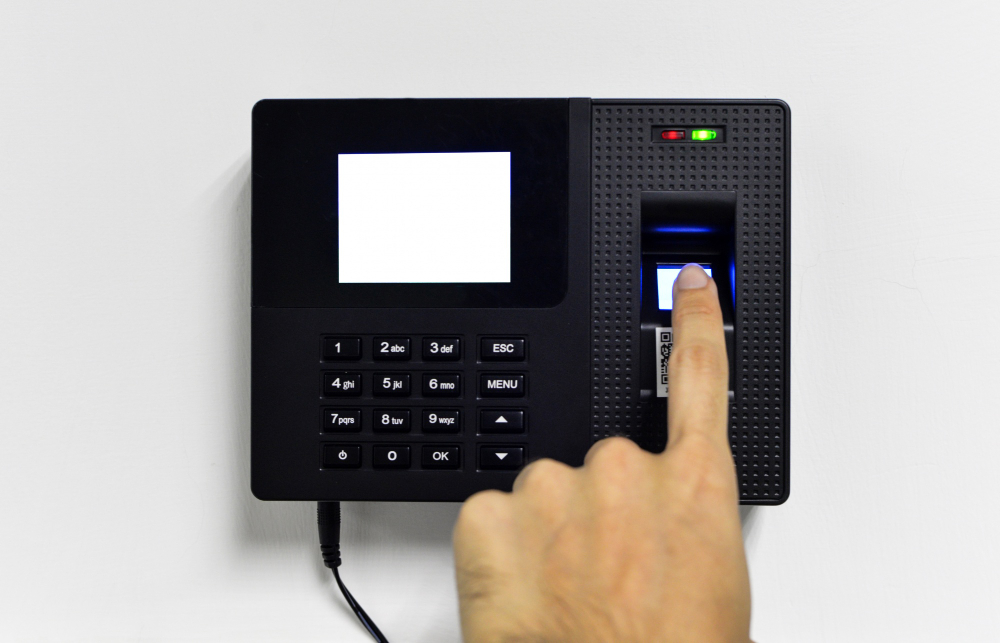
Access Control System Installation Dubai: Business Guide
Access Control System Installation in Dubai: What Businesses Need to Know
Access control system installation provides businesses with a practical way to manage who can enter an office, shop, warehouse, or other controlled area. Instead of relying only on mechanical keys, an access control system can use RFID cards, key fobs, PIN codes, biometric readers, or other supported credentials to manage authorized entry.
However, installing access control involves much more than mounting a card reader or fingerprint device beside a door. The reader, controller, power supply, electronic locking hardware and physical door all need to work together. Existing locks, door alignment and closing operation can also affect how reliably the finished system performs.
This is where an experienced Dubai locksmith with access-control knowledge can be useful. The electronic system needs to meet the property's access requirements, while the door, frame and locking hardware need to be suitable for the proposed installation.
What Is an Access Control System?
An access control system manages who is authorized to enter a particular door or restricted area.
Instead of issuing a mechanical key to every employee, a business can provide individual credentials. Depending on the system, these may include:
- RFID cards
- Key fobs
- PIN codes
- Biometric credentials
- Supported mobile credentials
When a user presents a credential, the access-control system checks whether it is authorized for that particular entrance. If access is approved, the system operates the compatible electronic locking hardware to allow entry.
A simple setup may control a single office entrance, while larger systems can manage multiple doors, users, and access permissions.
How Does an Access Control System Work?
Understanding the basic components makes it easier to plan a correct access control system installation.
1. Credential
The credential identifies the user to the system. It might be an RFID card, fob, PIN, fingerprint, or supported mobile credential.
2. Reader
The reader receives the credential information.
Depending on the system, this could be a card reader, keypad, biometric reader, or another compatible device.
3. Controller
The controller or access-control system determines whether the presented credential is authorized for that particular door.
4. Electronic Locking Hardware
If access is authorized, the system operates the compatible locking hardware.
The exact hardware depends on the door and installation and may include an electric strike, electromagnetic lock or another suitable electronic locking solution.
5. Door Hardware
Electronic access still depends on a physical door.
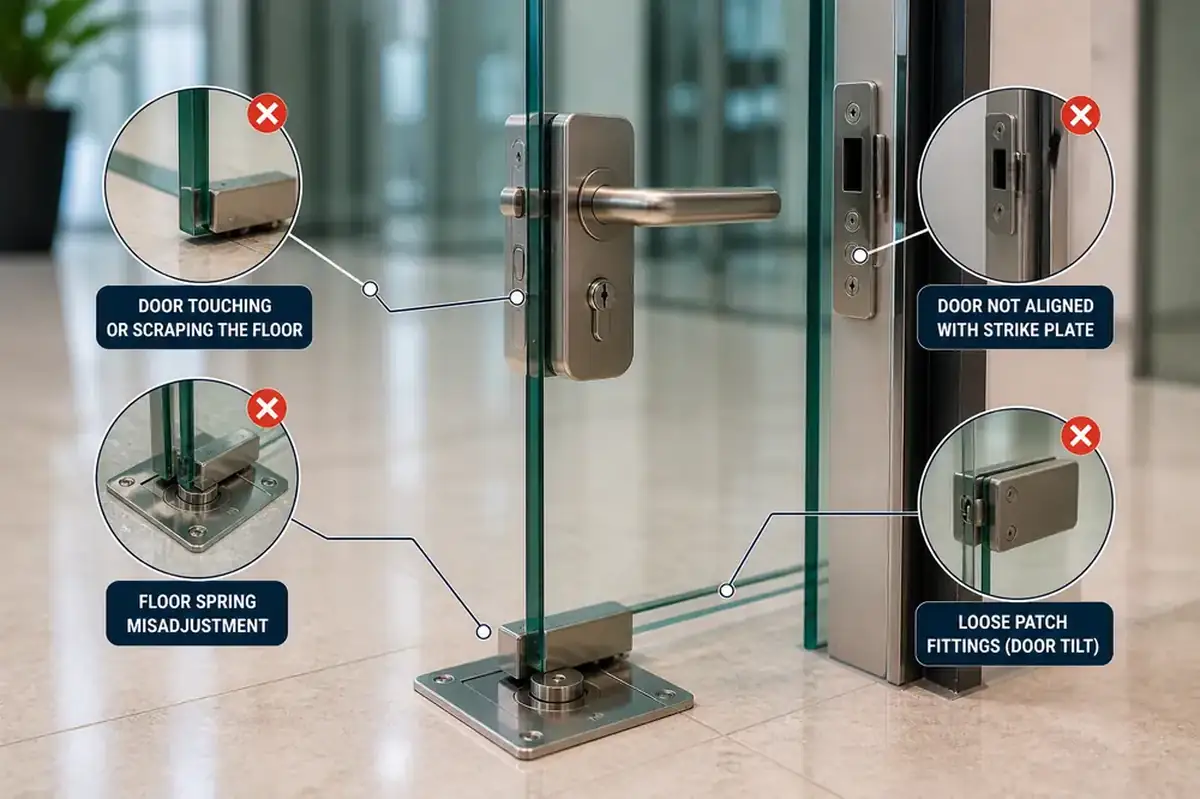
The door needs to open, close, and be secured correctly. Existing locks, hinges, door closers, alignment and frame condition can therefore affect the performance of the finished system.
What Is Included in Access Control System Installation?
An access-control project should be designed around the property rather than simply around a reader.
Depending on the system and door, an installation may involve:
- Access reader
- Controller
- Power supply
- Electronic locking hardware
- Exit device or button where applicable
- Door closer or related door hardware where required
- RFID cards or other credentials
- Cabling
- Network connectivity where required
- Access-management software
- System configuration
Not every installation requires all of these components.
A small office with one controlled entrance may have very different requirements from those of a warehouse or commercial property with several doors and multiple user groups.
Common Access Control Options
Choosing the right access method is one of the first decisions when planning an installation.
RFID Cards and Key Fobs
RFID cards and compatible key fobs are commonly used for controlled entry.
Each authorized user can be issued a credential rather than sharing the same mechanical key.
Depending on the access-control system, individual credentials can be added, removed, or assigned particular permissions.
This can be particularly useful for businesses with multiple employees.
PIN and Keypad Access
A keypad allows users to enter an authorized PIN instead of carrying a card or key.
PIN-based access may be useful for certain applications, but the way codes are managed is important. Sharing a single code among many employees can make access management more difficult.
Where supported, individual codes can provide more controlled user management.
Biometric Access
Biometric systems can use an enrolled characteristic such as a fingerprint to authenticate a user, depending on the equipment.
This may be useful where a business wants access associated with an enrolled individual rather than a transferable card or fob.
Businesses considering biometric systems should also consider the administrative, privacy and data-handling requirements applicable to their use.
Mobile Credentials
Some access-control platforms support compatible smartphones or apps as credentials.
The functionality varies by system, so mobile access should be selected only where the chosen platform specifically supports the required features.
Multiple Authentication Methods
Some systems can combine different authentication methods.
For example, particular applications may be configured to require more than one credential where supported and appropriate.
The right configuration depends on the security requirements of the controlled area.
RFID, PIN or Biometric: Which Should You Choose?
There isn't one access method that is automatically best for every property.
RFID card/fob
Multiple users need individual credentials
Cards and fobs need to be issued and managed
PIN/keypad
Keyless access without physical cards is preferred
Codes need appropriate management
Biometric
Access needs to be associated with enrolled users
Administration and data handling
Mobile credential
Smartphone-based access is preferred
Requires a compatible platform
Multiple methods
Additional authentication is required
More complex system configuration
Rather than choosing the technology first, start with three questions:
Who needs access?
Which doors should they be able to open?
How should their access be managed?
Once those questions are answered, selecting an appropriate system becomes much easier.
Why Businesses Install Access Control Systems
A conventional mechanical lock can still be appropriate for many doors. Access control is particularly useful when a business needs greater oversight of multiple users and entrances.
Individual Credentials
Employees can be assigned individual credentials rather than sharing the same mechanical key.
Different Access Permissions
Where supported, employees can be assigned access to particular doors or areas based on their role.
For example, general staff may have access to the main office while selected employees have additional access to a stock room or technical area.
Credential Deactivation
If a card or fob is lost or an employee leaves the company, an administrator may be able to disable that credential without changing access for other users.
Access Event Records
Some systems can maintain records of credential activity and access events.
The available information depends on the system and its configuration.
Managing Multiple Users
For a business with many employees, electronically managed credentials can make access administration more practical than issuing and tracking large numbers of mechanical keys.
Why the Door Matters During Access Control System Installation
A good access-control system cannot compensate for a badly functioning door.
If the door is misaligned, doesn't close properly, or has unsuitable locking hardware, installing an electronic reader won't automatically solve the mechanical problem.
Before access control system installation, the entrance should be assessed for factors such as:
- Door type and material
- Existing lock
- Frame condition
- Door alignment
- Closing operation
- Available installation space
- Suitable electronic locking hardware
This is one area where a Dubai locksmith experienced with access-control hardware can contribute to the installation.
The electronic and mechanical components need to function as one complete door system.
Electric Strike vs Magnetic Lock
The electronic locking hardware should be selected according to the actual door and system design.
Electric Strike
An electric strike can electronically control entry when used with a compatible door, frame, and locking arrangement.
Whether it is appropriate depends on the existing hardware and the required access-control configuration.
Electromagnetic Lock
An electromagnetic lock uses an electromagnet and armature arrangement to secure a compatible entrance when energized.
Its suitability needs to be considered in the context of the complete door, access-control, and applicable life-safety requirements.
Neither option should be selected simply because one appears stronger or more modern.
The door and application should determine the hardware.
Access Control System Installation for Small Offices
A small office may only need controlled access at one or two doors.
For example:
- Main office entrance
- Manager's room
- Stock room
- IT or server room
In this situation, a straightforward system may be more practical than installing equipment with functions the business doesn't need.
Consider the number of employees, which doors need controlled access, and how credentials will be issued and removed.
Access Control for Larger Offices
A larger office may require different access permissions for different departments or employees.
For example:
General employees → main entrance
Management → main entrance + management areas
IT staff → main entrance + authorized technical areas
Authorized storage staff → main entrance + designated storage areas
The exact structure should reflect how the organization operates.
A scalable access-control system can be particularly useful where employee numbers or access requirements may change over time.
Access Control System Installation for Warehouses
Warehouses and larger commercial properties often have different access requirements from conventional offices.
A warehouse may contain:
- Staff entrances
- Loading areas
- Storage rooms
- Administrative offices
- Restricted stock areas
- Technical rooms
Not everyone necessarily needs access to every area.
Where supported by the chosen system, credentials and permissions can be organized around users' roles.
The physical entrances should also be assessed individually, as the locking solution appropriate for an internal office door may not be suitable for another type of commercial entrance.
Can Access Control Work With Existing Doors and Locks?
In many cases, existing doors can form part of an access-control project, but this doesn't mean every existing component can remain unchanged.
The door, frame, and current locking hardware need to be inspected first.
Depending on the installation, existing hardware may be compatible, may require modification, or may need to be replaced with components suitable for electronic access.
A Dubai locksmith can assess the mechanical side of the entrance while the access-control requirements determine the electronic components.
What Happens When an Employee Leaves?
Employee changes are one reason businesses consider electronic access control.
With a mechanical key, the business normally needs the key returned. If it isn't returned and continued access is a concern, rekeying or changing the relevant lock may be necessary.
With an electronically managed access-control system, an authorized administrator may disable the departing employee's credential without affecting other authorized users.
The exact process depends on the system.
What If an Access Card Is Lost?
If an individually managed card or fob is lost, the person responsible for the access-control system should be informed.
Where supported, the lost credential can be disabled and another authorized credential issued.
For compatible credentials that require an additional authorized copy, you can also read our guide on accessing card duplication.
Internal link “access card duplication” to your informational access-card blog.
What Should You Check Before Installing an Access Control System?
Before choosing the equipment, define the actual requirements.
How Many Doors Need to Be Controlled?
A single-door office requires a different setup from a property with several controlled entrances.
How Many People Need Access?
Consider current employees as well as likely future requirements.
Does Everyone Need the Same Permissions?
If not, identify the different user groups and the areas each group should access.
Which Access Method Do You Prefer?
Consider cards, fobs, PINs, biometric credentials or supported mobile access based on your operational requirements.
What Happens When a Credential Is Lost?
The business should have a clear process for reporting and removing lost credentials.
What Happens When an Employee Leaves?
Determine who will be responsible for disabling or removing access.
Are the Existing Doors Suitable?
Check the doors, frames, locks, alignment, and closing operation before finalizing the electronic equipment.
Who Will Manage the System?
Someone within the organization should be responsible for issuing credentials and maintaining appropriate permissions.
Why Professional Access Control Installation Matters
An access control system installation combines electronic equipment with physical door hardware.
Even correctly selected electronic components can perform poorly if the locking hardware isn't suitable or the door doesn't close and align correctly.
A professional assessment should therefore consider:
the access requirements
the electronic system
the physical door and locking hardware
rather than treating them as separate projects.
If you're planning an access-control project in Dubai, the system should be designed around the actual property and its users before the final equipment is selected.
Frequently Asked Questions
What Is Access Control System Installation?
Access control system installation involves fitting and configuring the components required to electronically manage authorized entry through one or more doors.
Depending on the project, this can include readers, controllers, power supplies, credentials, electronic locking hardware, cabling and management software.
How Much Does Access Control System Installation Cost in Dubai?
The cost depends on factors such as the number of doors, access method, locking hardware, system architecture, and the condition of existing doors.
A single-door installation and a multi-door commercial system should not be expected to have the same requirements or cost.
Which Access Control System Is Best for an Office?
There is no single system that is best for every office.
The right choice depends on the number of employees, the number of doors, the required permission levels, and the preferred access method.
Can RFID Cards Be Used for Office Access?
Yes. Compatible RFID cards and key fobs are commonly used as credentials in access-control systems.
The reader and system must support the particular credential technology being used.
Is Biometric Access Better Than RFID?
Not necessarily.
They are different authentication methods. The appropriate choice depends on how the organization wants to identify users and manage access.
Can Access Be Removed When an Employee Leaves?
In a compatible managed system, an authorized administrator can typically remove or disable a user's credentials, depending on the system's functionality.
Can an Existing Office Door Be Converted to Access Control?
Often, but the door should be inspected first.
Its construction, existing lock, frame, alignment, and proposed electronic locking hardware all affect whether modification is required.
Can a Dubai Locksmith Install Access Control?
A Dubai locksmith with appropriate access-control expertise can work with the door, lock and compatible electronic locking components involved in the project.
The exact scope depends on the system, property, and any applicable building or regulatory requirements.
Planning an Access Control System Installation in Dubai
A successful access control system installation starts with the business requirements-not with choosing a card reader from a catalog.
First, identify which doors need controlled access and who should be able to use them. Decide whether employees need the same permissions or whether certain areas should remain restricted to specific users.
Next, choose an appropriate credential method and system architecture.
Finally, assess the doors.
The reader, controller, and software may manage authorization, but the physical door and locking hardware still determine whether the entrance closes and secures correctly.
Bringing these elements together is where an experienced Dubai locksmith and access-control installer can add practical value.
The best access-control installation isn't necessarily the one with the most features. It's the system that suits the property, works properly with the doors, and provides the business with the level of access management it actually needs.



.png)