
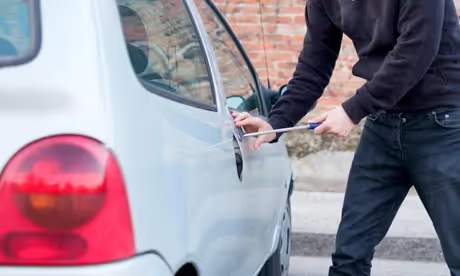
Car Theft Prevention: How to Protect Your Vehicle
Modern vehicles use a combination of physical locks, electronic keys, immobilizer systems, and other security features to control access. But no single feature should be treated as making a vehicle completely immune to theft or unauthorized entry.
Good car theft prevention is therefore less about worrying exactly how someone might try to enter a vehicle and more about reducing opportunities, protecting your keys, and promptly addressing damaged or missing security components.
For drivers in Dubai, simple habits can make a meaningful difference: confirm that the vehicle is locked, keep keys secure, avoid leaving valuables visible, and pay attention when a remote, door lock, or key starts behaving differently from normal.
If you discover a problem with the physical lock or key system, a car locksmith in Dubai can assess the relevant components and determine whether the issue involves the key, door lock, ignition lock, or another part of the vehicle's access system.
This guide explains practical ways to improve vehicle security without relying on myths about how car locks work.
How Does Modern Car Security Work?
A modern vehicle may use several layers of access and authorization rather than relying only on a mechanical door lock.
Depending on the make, model, and year, these can include:
- Mechanical door locks
- Remote-control keys
- Transponder keys
- Smart or proximity keys
- Immobilizer systems
- Alarm systems
- Manufacturer-specific electronic security features
These systems perform different functions.
For example, unlocking a door and authorizing the engine to start are not necessarily the same process. A mechanical key blade may operate a door cylinder, while an electronic component in the key may be involved in vehicle authorization.
This distinction is particularly important when a key is lost or stolen.
Simply producing another mechanical key does not necessarily address every security consideration associated with a missing electronic car key.
Physical Car Security vs Electronic Key Security
Vehicle security can be broadly considered from two perspectives.
Physical Security
This includes components such as:
- Door locks
- Handles
- Mechanical key cylinders
- Windows
- Boot or trunk locks
- Ignition lock components on applicable vehicles
Damage or wear to these components can affect how securely the vehicle closes and locks.
Electronic Security
Depending on the vehicle, electronic security can involve:
- Remote-control functions
- Transponder authorization
- Smart-key communication
- Immobilizer functions
- Electronic locking
- Vehicle-specific security settings
A problem on one side does not automatically mean there is a problem on the other.
For example, a remote-control button may stop operating while the mechanical key remains usable. In another situation, a key may unlock the door while the vehicle does not recognize it for starting.
Accurate diagnosis matters before replacing or repairing components.
Keyless Car Security: What Owners Should Know
Keyless entry and smart-key systems provide convenience, but they should not be treated as automatically eliminating every security risk.
If your vehicle uses passive keyless entry, start by understanding how the system works on your particular make and model.
Follow the vehicle manufacturer's recommendations for key storage and security settings. Where appropriate for the specific key system, owners may also consider suitable signal-blocking storage when the key is not in use.
It is also sensible to keep vehicle keys out of easy reach in the home.
Most importantly, don't assume the car has locked simply because you pressed a button or walked away with a smart key.
Confirm that the vehicle has actually secured according to its normal locking indicators.
10 Practical Car Theft Prevention Tips
The most useful car theft prevention measures are often straightforward habits that reduce unnecessary exposure.
1. Confirm That Your Car Is Actually Locked
Pressing the lock button and immediately walking away can become an automatic habit.
Instead, confirm that the vehicle has locked according to its normal indicators. Where appropriate, check the door before leaving the vehicle unattended.
If the vehicle regularly fails to lock, investigate the problem rather than simply pressing the remote several times.
The issue could involve the key, remote battery, vehicle battery, door lock, actuator or another component depending on the vehicle.
2. Keep Your Car Keys Secure
Don't leave vehicle keys unattended in obvious or easily accessible locations.
At home, consider where your main key and spare key are stored.
This is particularly relevant for vehicles that use passive keyless entry systems.
You should also know how many working keys the vehicle has. If a key disappears and you cannot account for it, don't simply assume that having another working key resolves the security concern.
3. Never Leave a Spare Key Inside the Vehicle
Keeping a spare car key in the glove compartment, center console, or another location inside the vehicle defeats much of the purpose of having a securely stored spare.
A spare should be kept in a secure, accessible location for an authorized person to retrieve when needed.
If you frequently lose track of spare keys, establish a specific storage location rather than moving them between bags, drawers and vehicles.
4. Don't Leave Valuables Visible
A locked vehicle can still attract unwanted attention if valuable items are clearly visible inside.
Avoid leaving items such as:
- Phones
- Laptops
- Wallets
- Handbags
- Shopping bags
- Cameras
- Other valuable electronics
in plain sight when the vehicle is unattended.
Even if the vehicle itself isn't taken, forced entry can damage glass, trim, handles, or locks.
5. Close the Windows and Sunroof
Before leaving the vehicle, make sure windows and the sunroof are properly closed.
This sounds basic, but vehicle security works best when all normal access points are secured.
Be particularly careful when leaving the vehicle for an extended period.
6. Pay Attention to Your Keyless-Entry Settings
Some vehicles provide configurable settings for passive entry, remote locking, or other security functions.
Available options vary significantly between manufacturers and models.
Review the owner's manual or manufacturer guidance to understand what your vehicle supports rather than changing settings based on generic online advice.
7. Choose Parking Locations Sensibly
Where possible, use established parking areas and follow the security procedures provided on site.
Before walking away:
Park → Switch off → Take the key → Close windows → Lock → Confirm
Don't leave the engine running unattended simply because you expect to return quickly.
8. Address Damaged Locks and Handles
A damaged door lock or handle should not be ignored merely because another access method still works.
For example, you might continue using the remote even though the mechanical door cylinder is damaged.
That may become a problem later if you need the mechanical backup method.
Have damaged physical security components inspected to determine whether repair is necessary.
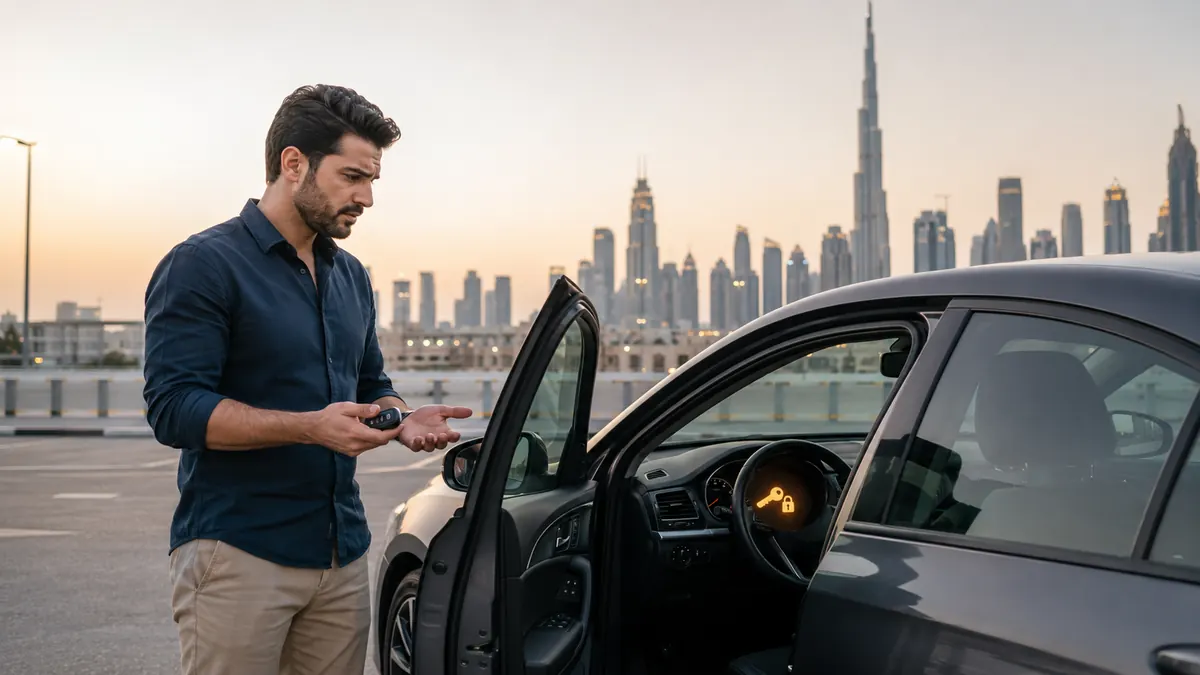
9. Don't Ignore Unusual Key or Remote Behavior
Pay attention if your vehicle suddenly:
- Doesn't respond consistently to the remote
- Shows a key-related warning
- Doesn't recognize a smart key
- Requires repeated button presses
- Unlocks but will not start
- Has a mechanical key that has become difficult to turn
These symptoms don't automatically indicate a security problem or attempted theft. They can have several causes.
But they are worth investigating rather than waiting until the key stops working completely.
10. Follow Manufacturer Security Guidance
Vehicle security systems vary enormously.
Advice appropriate for one manufacturer or model may not apply to another.
Use your owner's manual and manufacturer guidance for features such as:
- Keyless entry
- Spare keys
- Lost keys
- Remote batteries
- Security settings
- Alarm operation
- Emergency mechanical access
This is particularly important before attempting to disable, reset or reconfigure electronic key functions.
Should You Use a Signal-Blocking Pouch for Your Car Key?
For vehicles with compatible passive keyless entry systems, an appropriate signal-blocking storage product may be a security measure owners consider.
However, don't assume that every car key works the same way or that a single accessory provides complete vehicle protection.
If you use signal-blocking storage, test it with your particular key and vehicle according to the product and vehicle manufacturer's instructions.
It should be considered one part of sensible key management rather than a substitute for locking the vehicle, securing spare keys, and following manufacturer security recommendations.
What Should You Do If Your Car Key Is Lost?
A missing car key creates two separate problems.
The first is practical:
How will you access and use the vehicle?
The second is security-related:
Could someone else potentially have the missing key?
If you're reasonably confident that the key has simply been misplaced somewhere secure, the situation may be different from a key that disappeared in a public location.
The appropriate solution also depends on the vehicle's key system.
A modern car key can contain both a mechanical component and electronic authorization. Consequently, car key replacement may involve more than cutting another blade.
When requesting assistance, provide the vehicle make, model, and year so the key system can be identified correctly.
Lost Car Key vs Stolen Car Key
These situations should not be treated as identical automatically.
Lost Car Key
A lost key means you cannot locate it.
Depending on where it was lost and whether it could reasonably be connected to your vehicle, there may be a security concern.
Stolen Car Key
A stolen key presents a clearer concern because another person may intentionally possess a credential associated with your vehicle.
In that situation, simply obtaining another working key may not resolve the issue.
Depending on the vehicle, the electronic authorization associated with existing keys may need to be assessed.
The appropriate procedure varies by manufacturer and key system.
Can a Lost or Stolen Car Key Be Disabled?
On some vehicle systems, authorized keys can be managed through vehicle-specific programming procedures.
However, the process is not universal.
The important point is that cutting a new key and managing electronic key authorization are different tasks.
If a missing key creates a security concern, explain that when requesting service rather than simply asking for another key.
A technician can then determine what procedures are applicable to the particular vehicle.
Does Losing a Car Key Mean You Must Change the Car Locks?
Not necessarily.
With a traditional mechanical lock, replacing or reconfiguring the lock may be one way to address a compromised key.
Modern vehicles can be more complicated because mechanical and electronic security may operate together.
Depending on the vehicle, the appropriate response could involve assessing:
- Remaining keys
- Mechanical lock cylinders
- Electronic key authorization
- Immobilizer-related key functions
- Replacement-key requirements
There is no universal rule that every lost car key requires replacing all vehicle locks.
The correct approach depends on the vehicle and the circumstances in which the key went missing.
What If Your Car Remote Stops Working?
A remote that stops locking or unlocking the vehicle does not automatically mean the car's security system has failed.
Possible causes can include:
These are troubleshooting indicators, not definitive diagnoses.
If your car key is not recognized, identifying whether the problem involves the remote, transponder, smart-key system or vehicle itself is more useful than replacing components without diagnosis.
What If Someone Has Tried to Break Into Your Car?
An attempted vehicle break-in should be treated differently from an ordinary lockout.
Before arranging repairs, inspect the vehicle without unnecessarily disturbing visible evidence.
Look for signs such as:
- Broken glass
- Damaged door handle
- Damaged lock cylinder
- Door or trim damage
- Ignition damage
- Missing property
- Disturbed interior
- Unusual vehicle warnings
Where appropriate, document visible damage and contact the relevant authorities and your insurer.
Once any necessary reporting or documentation has been handled, the damaged vehicle components can be assessed.
Car Lock Damaged After an Attempted Break-In
Physical damage can affect the vehicle even when the person did not successfully enter it.
A damaged cylinder, handle or locking component may become difficult to operate or may stop functioning completely.
Avoid forcing a damaged key cylinder.
If the issue involves the vehicle's physical lock or key system, a car locksmith in Dubai can inspect the affected components and determine whether locksmith work is appropriate.
Damage involving bodywork, windows, wiring or other vehicle systems may instead require an automotive workshop or another specialist.
The correct provider depends on what has actually been damaged.
What If You're Locked Out of the Car?
A lockout and a theft-related security problem are different situations.
If your keys are simply locked inside an otherwise undamaged vehicle, the appropriate service is a car lockout service in Dubai.
Don't attempt improvised entry methods that could damage the glass, weather seals, trim, wiring or locking components.
If you suspect attempted theft or find visible damage, however, treat the situation accordingly rather than assuming it is a normal lockout.
Should You Change Your Car Security After Buying a Used Vehicle?
When purchasing a used vehicle, confirm how many keys are supplied and compare that information with the vehicle documentation and available manufacturer information where appropriate.
If you have concerns about missing keys, ask what options are available for the particular vehicle's key system.
This doesn't mean every used car needs new locks.
The objective is to understand:
- How many keys you received
- Which keys operate the vehicle
- Whether any known keys are missing
- What security options the manufacturer provides
If electronic key management is required, it should be handled in accordance with the vehicle's specific system.
What About House Keys Attached to a Stolen Car Key?
A stolen keyring can create a broader security issue if it contains keys for several places.
For example, your car key may be attached to:
- House keys
- Apartment keys
- Office keys
- Building-access credentials
- Garage remotes
In this situation, consider each affected credential separately.
If the missing keyring could be associated with your home or another property, a locksmith in Dubai can assess the relevant mechanical locks and advise whether changing, rekeying, or another solution is appropriate.
Electronic access cards or remotes may require separate credential-management procedures.
Common Car Security Mistakes
Car security doesn't need to become complicated. Avoiding a few common mistakes can improve everyday key and vehicle management:
- Assuming the car is locked without checking.
- Leaving a spare key inside the vehicle.
- Leaving valuables clearly visible.
- Ignoring a damaged mechanical door lock because the remote still works.
- Keeping all vehicle keys together.
- Ignoring repeated low-battery or key warnings.
- Treating a stolen key exactly like a misplaced key.
- Assuming a newly cut mechanical blade resolves electronic key authorization.
- Trying random online procedures to reset vehicle security systems.
- Waiting until the last working key is lost before arranging another authorized key.
The aim is not to make exaggerated promises about preventing every possible theft. It is to reduce avoidable security weaknesses and deal appropriately with key or lock problems when they arise.
Frequently Asked Questions About Car Theft Prevention
Are Keyless Cars Secure?
Keyless vehicles use manufacturer-specific electronic security systems, but no vehicle should be described as completely theft-proof. Owners should follow the manufacturer's security guidance and use sensible key-storage and vehicle-locking practices.
Should I Keep My Car Key Away From the Front Door?
For passive keyless-entry vehicles, storing keys in less accessible locations can be a sensible precaution. Check your vehicle manufacturer's recommendations for your specific system.
Should I Use a Signal-Blocking Pouch?
An appropriate signal-blocking storage product may be considered for compatible passive-entry keys. If you use one, verify that it works with your particular key rather than assuming it is effective.
What Should I Do If My Car Key Is Stolen?
Consider both replacement access and the security implications of the missing key. Depending on the vehicle, the remaining and missing electronic keys may need to be assessed.
Can a Stolen Car Key Be Removed From the Vehicle's System?
Some vehicle key systems allow authorized keys to be managed through vehicle-specific procedures. The available process depends on the make, model, year, and security system.
Do I Need to Change My Car Locks If a Key Is Missing?
Not automatically. Modern vehicle security can involve both mechanical locks and electronic key authorization. The appropriate action depends on the vehicle and how the key was lost.
Why Is My Car Not Locking With the Remote?
Possible causes include the remote battery, remote itself, vehicle battery, receiver, door-lock components or another vehicle-side issue. Diagnosis should come before replacing parts.
Can a Locksmith Repair a Damaged Car Door Lock?
A car locksmith may be able to repair or address certain vehicle lock and key problems. Damage to bodywork, glass, wiring, or other automotive systems may require a workshop or another specialist.
Is a Car Lockout the Same as a Car Security Problem?
No. Keys accidentally locked inside an undamaged vehicle are primarily an access problem. A missing stolen key or damaged lock can create a different security concern.
Protect the Car, the Keys and the Access System
Effective car theft prevention isn't based on one lock, one electronic feature or one accessory.
Think about the vehicle as a complete access system: physical locks, keys, electronic authorization, spare-key management and your everyday habits all play a role.
Confirm that the vehicle actually locks, keep keys and spares secure, avoid leaving valuables visible, follow the manufacturer's guidance for keyless systems,, and investigate damaged locks or unusual key behavior instead of ignoring them.
If a car key is lost or stolen, consider both how you'll regain normal use of the vehicle and whether the missing key creates a security concern. And if the vehicle's physical lock or key system is damaged, have the affected component properly assessed before relying on it again.

.png)