
Ignition Repair in Dubai: 5 Signs Your Car Ignition Needs Attention
You insert the key into the ignition, but something feels different. Perhaps the key has become difficult to turn, gets stuck, or only works after several attempts. That does not automatically tell you what has gone wrong, but it is a good reason to stop forcing the key and have the problem checked. Professional ignition repair starts with identifying the source of the fault, and when the problem involves the key or mechanical ignition lock, a car locksmith may be able to help.
Ignition-related problems are not always sudden. Sometimes there are warning signs for days or weeks before the key finally refuses to turn. Paying attention to those changes can give you an opportunity to deal with the problem before you are left unable to use the vehicle.
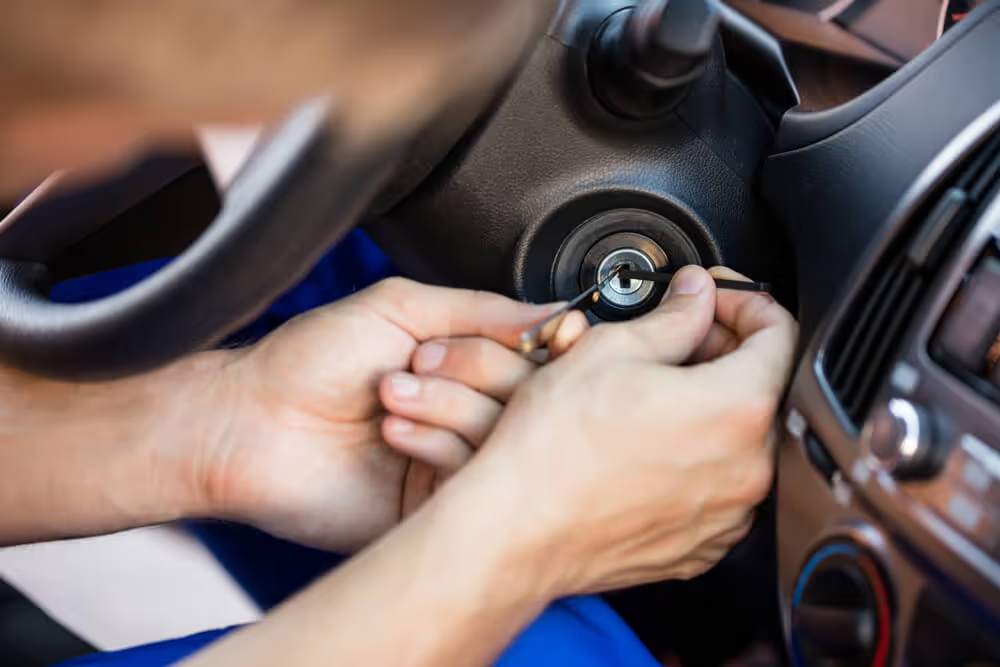
It is also important not to assume that every car that fails to start has an ignition-lock problem. A no-start condition can have causes beyond a locksmith's work. This guide focuses specifically on problems involving the car key and mechanical ignition lock and explains when automotive locksmith assistance may be appropriate.
1. Your Car Key Is Becoming Difficult to Turn
A key that used to turn normally but has gradually become stiff is worth paying attention to.
You may notice that you have to move the key slightly, try more than once, or apply more pressure before it turns. It can be tempting to accept this as part of driving an older vehicle, but a noticeable change in how the key operates should not simply be ignored.
There can be different reasons for this behavior, and the symptom alone is not enough to diagnose the problem.
The key itself may need to be examined, particularly if it is visibly worn or damaged. The mechanical components of the ignition lock may also need to be checked.
If you have a spare key, tell the locksmith whether it behaves differently. That information can be useful when assessing the problem, although it does not by itself establish what has failed.
Most importantly, avoid repeatedly applying excessive force. If the key is already worn or damaged, forcing it is not a good way to find out what is wrong.
2. Your Key Gets Stuck in the Ignition
A key that goes into the ignition normally but does not come out as expected can be frustrating, particularly when the problem appears without warning.
Avoid repeatedly pulling, twisting, or forcing the key to remove it.
A stuck key does not automatically mean that the complete ignition assembly needs replacing. The vehicle, key, and ignition need to be assessed before deciding what requires attention.
When speaking to a car locksmith, describe exactly what happens.
Does the key turn but refuse to come out? Does it become stuck before turning? Has the problem happened before, or is this the first time?
Small details like these are more useful than trying to diagnose the fault yourself.
3. Your Key Has Broken Inside the Ignition
A broken car key creates two separate questions: how to remove the broken piece and why the key broke in the first place.
If part of the key remains inside the ignition, avoid pushing tools or other objects into the keyway. An unsuccessful attempt to remove it can make professional extraction more difficult.
A car locksmith may be able to remove the broken section, depending on the situation.
Once the key has been extracted, however, do not automatically assume the job is finished.
If the key was already bent, cracked, or badly worn, it may have contributed to the problem. If the ignition had also become noticeably difficult to operate before the key broke, that information should be mentioned to the technician.
The aim should be to address the immediate problem while also checking whether anything else requires attention.
4. Your Spare Key Works Differently
If you have two keys for the vehicle, comparing their behavior can provide useful information.
Suppose the key you normally use has become difficult to turn, while your spare operates differently. That is something worth telling the locksmith.
It does not automatically prove that the ignition is fine or that the first key is faulty. Proper diagnosis still matters. But it gives the technician another piece of information when examining the problem.
Take a look at the keys as well.
If one is visibly damaged, bent, or noticeably worn, mention it rather than continue using additional force to ignite.
A professional ignition repair assessment should consider the symptoms you are experiencing rather than immediately replacing components based on an assumption.
5. There Is Visible Damage Around the Ignition
Physical damage around the ignition is another reason to have it checked.
Perhaps the ignition has been tampered with, or you can see that something is no longer sitting or operating as it normally did.
In that situation, repeatedly inserting and turning the key may not be sensible.
Have the affected area inspected first.
The appropriate solution will depend on what has actually been damaged. Some problems may involve components that fall within the scope of automotive locksmith work, while others may require a different automotive specialist.
The important thing is not to decide in advance that you need a complete replacement before anyone has established what is wrong.
Does an Ignition Problem Always Mean the Ignition Needs Replacing?
No.
One of the easiest assumptions to make is that an ignition problem automatically means buying a complete replacement.
That is not necessarily the case.
The correct solution depends on the vehicle, the symptoms, the condition of the key, and which component is actually responsible for the problem.
If the issue can be appropriately repaired, replacing additional parts unnecessarily would make little sense. In other cases, the condition of the affected component may make replacement the appropriate option.
That is why ignition repair should begin with diagnosis.
A technician needs to understand what is happening before deciding what should be repaired or replaced.
Is Every Car Starting Problem an Ignition Repair Job?
No, and this distinction is important.
If you turn the key and the vehicle does not start, that symptom alone does not prove there is a mechanical ignition-lock problem.
A vehicle's starting system involves components outside the scope of conventional automotive locksmith work. Without diagnosis, it would be inaccurate to tell someone that every no-start problem requires a locksmith or an ignition repair.
A car locksmith is more directly relevant when the problem involves the key or areas within automotive locksmithing-for example, a key that is stuck or broken in the ignition, or problems with the mechanical ignition lock.
If the problem turns out to involve another vehicle system, the appropriate automotive specialist may be required instead.
What Should You Tell a Car Locksmith?
You do not need to know the technical name of the faulty component before calling.
In fact, it is usually better to describe exactly what the vehicle is doing rather than trying to diagnose it yourself.
Start with the make, model and year of the vehicle. Then explain what happens when you use the key.
Useful details include:
- Whether the key enters the ignition normally
- Whether it turns at all
- Whether it feels unusually stiff
- Whether the key becomes stuck
- Whether the key is visibly bent, cracked or damaged
- Whether you have tried a spare key
- Whether the spare behaves differently
- Whether there is visible damage around the ignition
- Whether the problem appeared suddenly or gradually
This gives the locksmith a clearer picture of the situation before deciding whether the problem falls within their scope of work.
Should You Keep Using an Ignition That Is Becoming Difficult to Turn?
If the ignition still works after a few attempts, it can be tempting to leave the problem for another day.
That may simply turn an inconvenient problem into one that catches you at a much worse time.
If the key used to turn normally but now requires unusual force or several attempts, have the problem checked rather than making force part of your normal starting routine.
The important point is the change in behavior.
Something that operated normally before and has started behaving differently deserves attention, even if the car is still usable at the moment.
Can a Car Locksmith Remove a Broken Key From the Ignition?
Depending on the vehicle and situation, an automotive locksmith may be able to assist with a broken key inside the ignition.
The important thing from the driver's side is to avoid making extraction more difficult.
Pushing screwdrivers, wires, or other unsuitable objects into the ignition is not a substitute for proper key extraction. If the broken section is difficult to reach, forcing tools around it may complicate the situation.
Explain what happened when contacting the locksmith, including whether any part of the key remains visible.
Once the broken key is addressed, the condition of the key and ignition can also be assessed before the vehicle is returned to normal use.
Ignition Repair or Ignition Replacement?
The words repair and replacement are sometimes used as though they mean the same thing. They do not.
Ignition repair involves addressing a problem in the existing component when an appropriate repair is possible.
Replacement means removing an affected component and installing another suitable one.
Which approach makes sense cannot be decided purely from a phone description such as “my key won't turn.”
The vehicle and fault need to be considered first.
That is also why customers should be cautious about anyone immediately promising a particular repair or replacement without enough information to understand the problem.
Choosing a Car Locksmith for Ignition Repair
Ignition and key work is security-sensitive automotive work, so it makes sense to know who you are dealing with.
When contacting a car locksmith, give them the vehicle details and explain the symptoms before confirming the job. Ask whether they handle the type of ignition or key problem you are experiencing.
You should also understand what work is being proposed before it begins and ask about the expected cost.
For security-sensitive vehicle work, be prepared to provide identification and vehicle documentation to confirm your authorization to request the service.
Can Ignition Problems Be Prevented?
Not every ignition problem can be predicted or prevented, but you can pay attention to the way the key behaves.
If your key has become visibly damaged or the ignition has started requiring noticeably more force, do not wait until something breaks before investigating the change.
The same applies if one key consistently behaves differently from another.
You do not need to diagnose the problem yourself. Simply recognizing that something has changed and having it checked can be enough.
Frequently Asked Questions
Can a Car Locksmith Repair an Ignition?
A car locksmith may be able to assist with certain key-related and mechanical ignition-lock problems.
Whether ignition repair is possible depends on the particular vehicle, the affected component, and the nature of the fault. The problem should be assessed before deciding whether repair or replacement is appropriate.
Why Won't My Car Key Turn in the Ignition?
There can be different causes, and a key refusing to turn is not enough by itself to identify the fault.
If the key previously worked normally, avoid forcing it repeatedly. If you have a spare key, note whether it behaves differently and provide that information when having the problem assessed.
Does a Faulty Ignition Always Need to Be Replaced?
No.
The appropriate solution depends on the cause of the problem and the condition of the affected components. Diagnosis should come before a decision to repair or replace anything.
Can a Broken Key Be Removed From a Car Ignition?
A car locksmith may be able to extract a broken key from an ignition, depending on the vehicle and situation.
Avoid pushing the broken piece farther inside or using unsuitable objects to remove it.
What Information Should I Give the Car Locksmith?
Provide the vehicle's make, model, and year, and describe exactly what is happening.
Tell the locksmith whether the key turns, gets stuck, has broken, appears damaged, or behaves differently from a spare key.
Should I Replace the Ignition If My Key Is Difficult to Turn?
Not automatically.
A difficult key does not by itself establish which component is responsible. Have the key and ignition assessed before deciding that replacement is necessary.
Pay Attention to What Your Car Key Is Telling You
Ignition problems do not always begin with a key that suddenly refuses to move. Sometimes the first sign is much smaller: the key needs an extra attempt, feels different when you turn it, or occasionally gets stuck.
Those changes are easy to ignore while the vehicle is still usable.
If the problem continues, however, don't rely on additional force or assume you already know which component needs replacing. Proper ignition repair begins with finding out what is actually causing the problem.
When the issue involves the key or mechanical ignition lock, an experienced car locksmith can assess the situation and determine whether the problem falls within their scope of services.
Deal with the symptoms while they are still warning signs rather than waiting for the key to stop working altogether.



.png)