
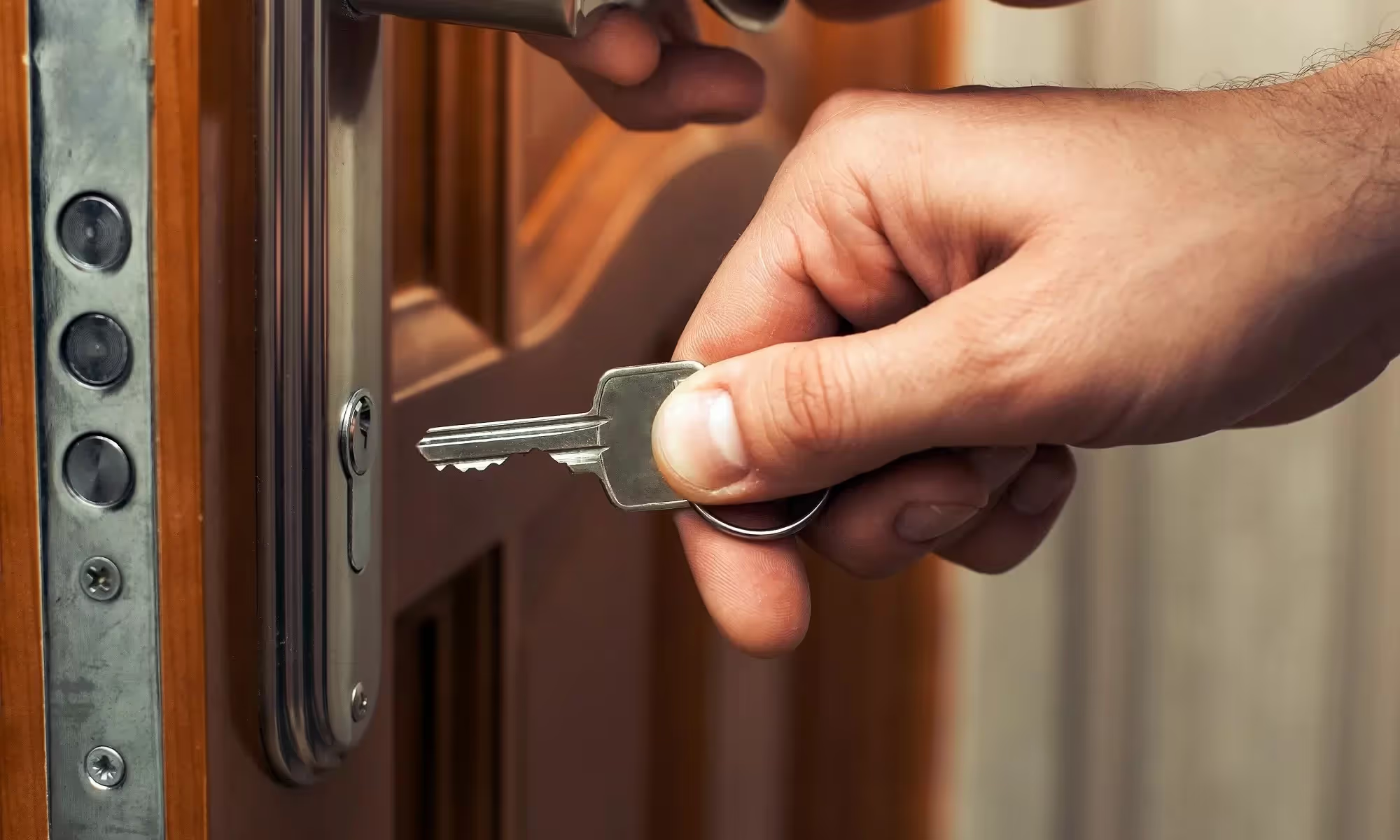
Locksmith Dubai: 10 Signs It’s Time to Call a Professional
Locks are a fundamental aspect of our everyday lives. They keep our homes and belongings safe and secure, giving us peace of mind. However, there are times when locks can cause problems, whether it’s a broken key, a faulty lock, or being locked out of your own home. That’s where a Locksmith Dubai comes in. Locksmiths are skilled professionals who specialize in working with locks and keys and can help you in various situations. This blog post will discuss ten indications that it is time to contact a Locksmith Dubai.
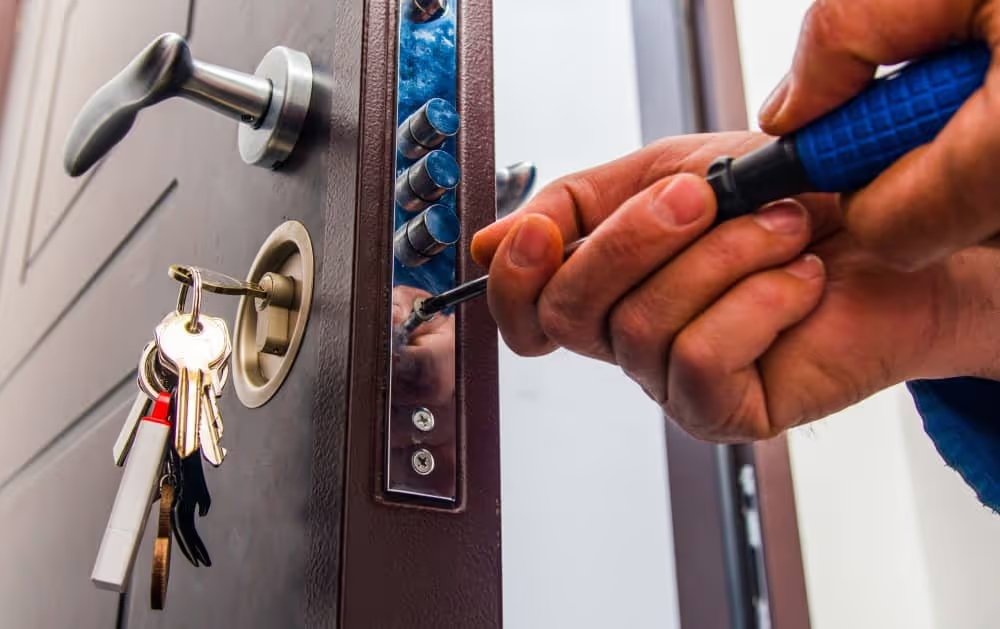
Locksmith Dubai: 10 Signs It’s Time to Call a Professional
Locks rarely get much attention when they’re working properly. You put the key in, turn it, and carry on with your day. It’s usually only when a key starts sticking, a door becomes difficult to lock, or something stops working altogether that you notice there may be a problem. Knowing when to call a professional Locksmith Dubai service can help you deal with these issues before a troublesome lock turns into a complete lockout.
Some problems are obvious. If you're standing outside your home without a key, you already know you need help. Others develop gradually and are much easier to ignore.
Here are ten situations where it makes sense to have your lock, key, or door checked.
1. Your Key Has Become Difficult to Turn
A key shouldn't suddenly need a lot of force to operate a lock.
If you've started twisting the key harder than usual, moving it back and forth, or pushing the door while turning it, something may need attention.
The problem isn't necessarily the key itself. The lock, cylinder, door position, or surrounding hardware could also be involved. Without inspecting it, there is no reliable way to say exactly what is causing the problem.
What you shouldn't do is keep forcing it every day and hope it gets better.
If a lock that previously worked normally has become difficult to use, getting it checked while it still opens is much more convenient than dealing with it after it stops working completely.
2. You Keep Having to Push or Pull the Door to Lock It
Sometimes the key turns perfectly when the door is open but becomes difficult once the door is closed.
You might find yourself pulling the handle towards you, pushing against the door, or lifting it slightly before the lock engages.
That's worth investigating.
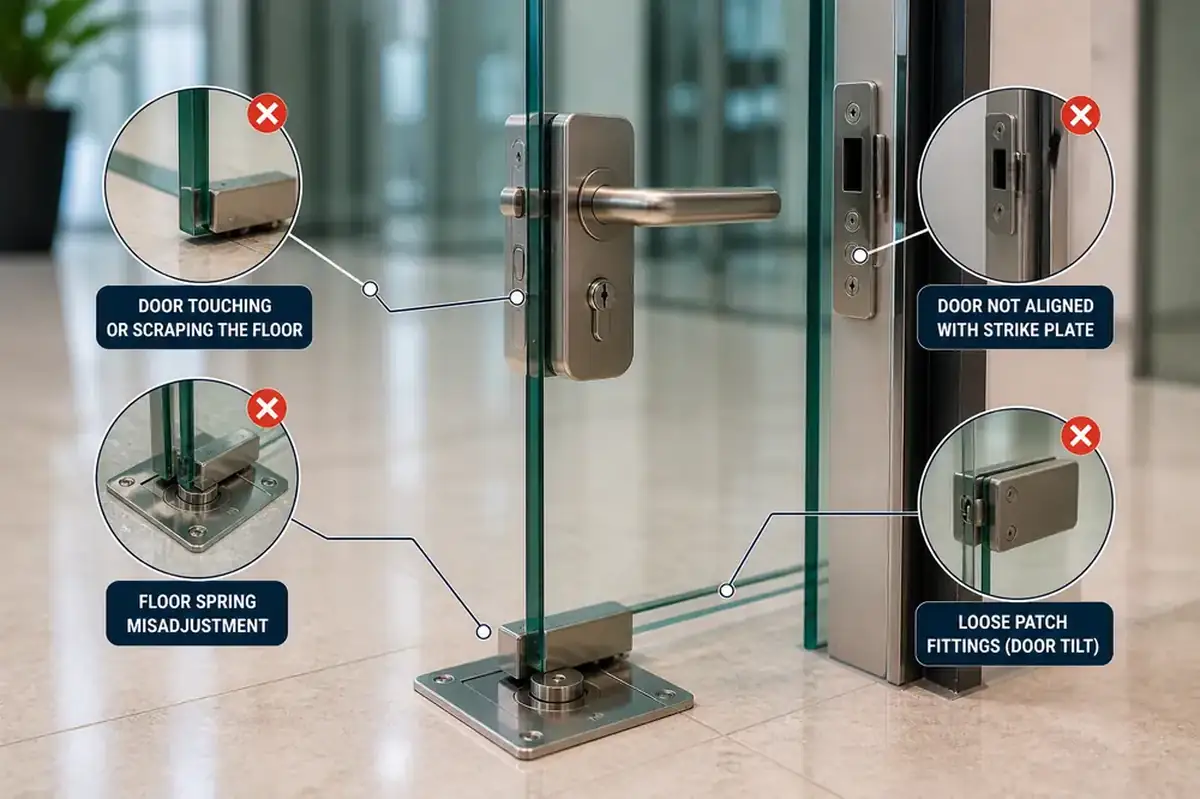
The lock itself may not necessarily be the source of the problem. The position of the door and the way the locking components meet can affect how smoothly everything operates.
Rather than immediately replacing the lock, have the door and locking hardware checked together. Identifying the cause first can help avoid unnecessary part replacements.
3. A Key Has Broken Inside the Lock
A broken key can turn an ordinary day into a frustrating one very quickly.
If part of the key is still visible, it can be tempting to grab whatever tool is nearby and try to pull it out. The problem is that pushing or manipulating the broken piece incorrectly can make extraction more difficult.
A locksmith can examine the lock and determine how to remove the broken section.
Once the key is out, it is also worth looking at why it broke. The key may have been damaged or worn, but resistance from the lock may also have contributed.
Simply removing the broken piece doesn't necessarily explain what caused the problem in the first place.
4. The Lock Feels Loose or Doesn't Work as It Used To
You use your front-door lock so often that you usually notice when something feels different.
Perhaps the handle has become loose. Maybe the cylinder moves more than it used to, or the locking mechanism doesn't feel as smooth as before.
Don't automatically assume that the entire lock needs replacing.
A professional locksmith can inspect the affected hardware and determine what is actually wrong. Depending on the problem and the condition of the components, the appropriate solution may be an adjustment, repair, or replacement.
The important thing is not to ignore a noticeable change until the lock stops working altogether.
5. You've Lost Your Keys and Don't Know Where They Are
Leaving your keys at a relative's house is one thing. Losing them somewhere without knowing where they ended up is different.
In that situation, getting back inside may only be part of the concern. You may also need to think about whether the missing key could be associated with your property.
That doesn't mean every lost key automatically requires a completely new lock.
Depending on the type of lock and the circumstances, different options may be available. Explain what happened to the locksmith and let them assess the existing lock before deciding what needs to be changed.
If you have another key, don't forget to mention that too.
6. You've Recently Moved Into a New Property
Moving into a new home comes with plenty of things to organize, and the existing locks are easy to overlook.
Start by finding out how many keys were handed over and who, if anyone, is supposed to have another authorized copy. Test the main door as well. Make sure the key turns normally and that the door locks and closes as expected.
If you don't know how many copies of the existing keys may be in circulation, discuss the situation with a locksmith.
You don't necessarily have to replace every lock simply because you've moved. The condition of the existing hardware and your concerns about access should guide the decision.
7. You're No Longer Sure Who Has a Spare Key
Spare keys have a habit of disappearing into people's drawers and key rings over the years.
You may have given one to a relative, cleaner, employee, or another person who needed temporary access. Months or years later, it can be difficult to remember exactly how many copies exist.
For a home or business, that's a good reason to review who currently needs access.
If the keys haven't been returned or you no longer know where all the copies are, a locksmith in Dubai can inspect the existing locks and explain the available options.
The appropriate solution will depend on the lock and your particular circumstances, so don't assume replacement is always necessary.
8. You Want to Upgrade to a Different Lock
You don't have to wait until something breaks before speaking to a locksmith.
Perhaps you've moved into a property with an older lock, want to change how access is managed, or are considering a smart lock for the main door.
Before buying anything, start with the door.
Not every lock is suitable for every door, and compatibility can depend on the existing locking hardware, door dimensions, and installation. This is particularly important with smart locks, where features and fitting requirements vary between products.
Having the existing setup checked first can help you understand what options are suitable before spending money on new hardware.
9. You're Having Trouble With a Car Key or Lock
Vehicle lock and key problems require a different set of skills and equipment from ordinary residential lock work.
You might have left the key inside the vehicle, lost it, damaged it, or found that it no longer works as expected.
Cars also use different types of keys and security systems depending on the manufacturer, model and year. That means there isn't one procedure or piece of equipment that applies to every vehicle.
When contacting an automotive locksmith, give them the car's make, model, and year, and briefly explain what has happened. These details help them understand what they're dealing with before attending the job.
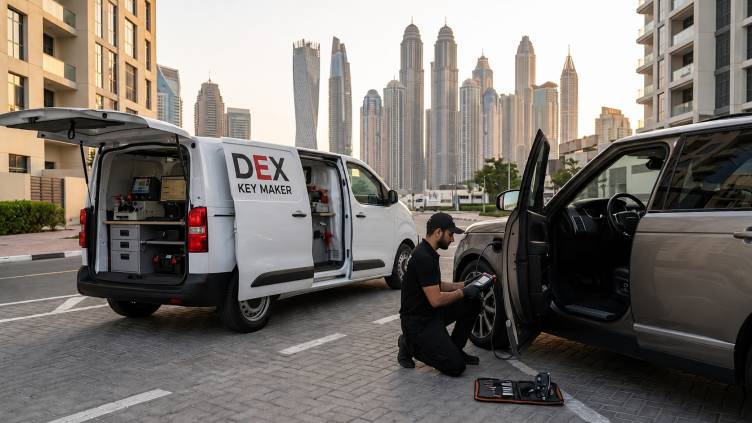
For vehicle unlocking work, DEX Key Maker requires identification and vehicle registration to confirm authorization.
10. You've Been Locked Out
Sometimes there are no warning signs at all.
You step outside, the door closes behind you, and the keys are sitting on the other side. Or you arrive home and discover that the key you've been using every day suddenly won't open the door.
Before doing anything else, check whether you have another authorized entry point to the property or whether someone you trust has a spare key.
If not, avoid forcing the door or experimenting with unsuitable tools. What starts as a lockout can become damage to the lock, door, or frame if unnecessary force is used.
Call a locksmith, explain what has happened and let them assess the lock before deciding how to proceed.
Does a Faulty Lock Always Need to Be Replaced?
No.
One mistake people can make is assuming that any problem with a lock means they need a completely new one.
Locks can stop working properly for different reasons, and the lock itself isn't always the only component involved. The key, cylinder, locking mechanism, door position, or surrounding hardware may need to be taken into account.
That's why inspection comes before the decision to repair or replace.
If the existing lock can be appropriately repaired and remains suitable for the door, replacement may not be necessary. In other situations, replacing a damaged or unsuitable component may make more sense.
There isn't one answer for every door.
What Should You Tell the Locksmith When You Call?
You don't need to know the technical name of your lock.
Just explain what you're experiencing.
Tell the locksmith whether the key is lost, broken, stuck, or difficult to turn. If the door isn't locking properly, explain what happens when you try.
For vehicle problems, provide the make, model, and year.
If you're not sure what kind of lock you have, don't guess. If requested, a clear photograph may help the locksmith understand what you're dealing with.
It is also worth clearly stating your location and asking about the technician's availability and expected charges before confirming the job.
Frequently Asked Questions
When Should I Call a Locksmith in Dubai?
Call a locksmith when you can't access a property you're authorized to enter, a lock or key has stopped working properly, a key has broken, or you need professional advice about changing or upgrading a lock.
You don't always have to wait for a complete lockout. A lock that has become noticeably difficult to use is also worth checking.
Should I Replace a Lock That's Difficult to Turn?
Not automatically. Difficulty turning a key can have various causes, so the problem should be identified before deciding whether the lock or another component needs to be replaced.
Avoid repeatedly forcing a key that has suddenly become difficult to turn.
What Should I Do If My Key Breaks Inside the Lock?
Avoid pushing the broken piece farther into the lock or repeatedly trying unsuitable tools to remove it.
A locksmith can inspect the lock and determine how to deal with the broken key. It may also be worth checking why the key broke, particularly if the lock had already become difficult to operate.
Don't Wait for a Small Problem to Become a Lockout
The easiest lock problems to deal with are often the ones you notice early.
If a key that used to turn smoothly suddenly needs force, the door has to be pushed before it locks, or the hardware simply doesn't feel the way it used to, pay attention to it. You may be able to have the problem checked at a convenient time, rather than discovering it when you're trying to leave for work or get back home.
And when you do need a Locksmith Dubai service, explain what has happened rather than assuming what needs to be repaired or replaced. A proper assessment of the lock, key, and door should come first.


.png)